I - Prologue
For the person I am right now, it feels a little too early to write something resembling an autobiography or a memoir. But I think if I wait until these memories fade with time before recording them, I may end up losing many of these emotional anchors.
Maybe it would be better not to treat it as an autobiography.
Let’s build some structures out of chaos.
Before I decide what is worth recording, I must first admit that I have done many wrong things, and carried many dark thoughts. Too many of them are things I may never be able to speak of. I feel ashamed.
Some of those unspeakable thoughts and actions may not be wrong in any conventional sense. They only cross a line I have drawn for myself. So, if I look at myself objectively and still find them impossible to accept, then they are wrong to me. They are ugly.
But I am not writing a certificate of innocence for myself. I know there are dark parts within me, just as there are parts that still face the light. What I want is to understand this: how did I grow, step by step, into the person I am now.
I used to care deeply about what other people thought of me. Before doing something, while doing it, and even after it was done, I could not help thinking about how others would see me. For a long period of time before and after I became an adult, I saw myself as something deeply conflicted and full of contradictions.
But looking back now, I realize that I can gradually sense the changes within myself. I no longer care as much about many of the things that once mattered so much to me. The change seems to have begun during high school, and the things I have experienced over the years have made me feel that too much contact with people and events inevitably makes my mind feel noisy.
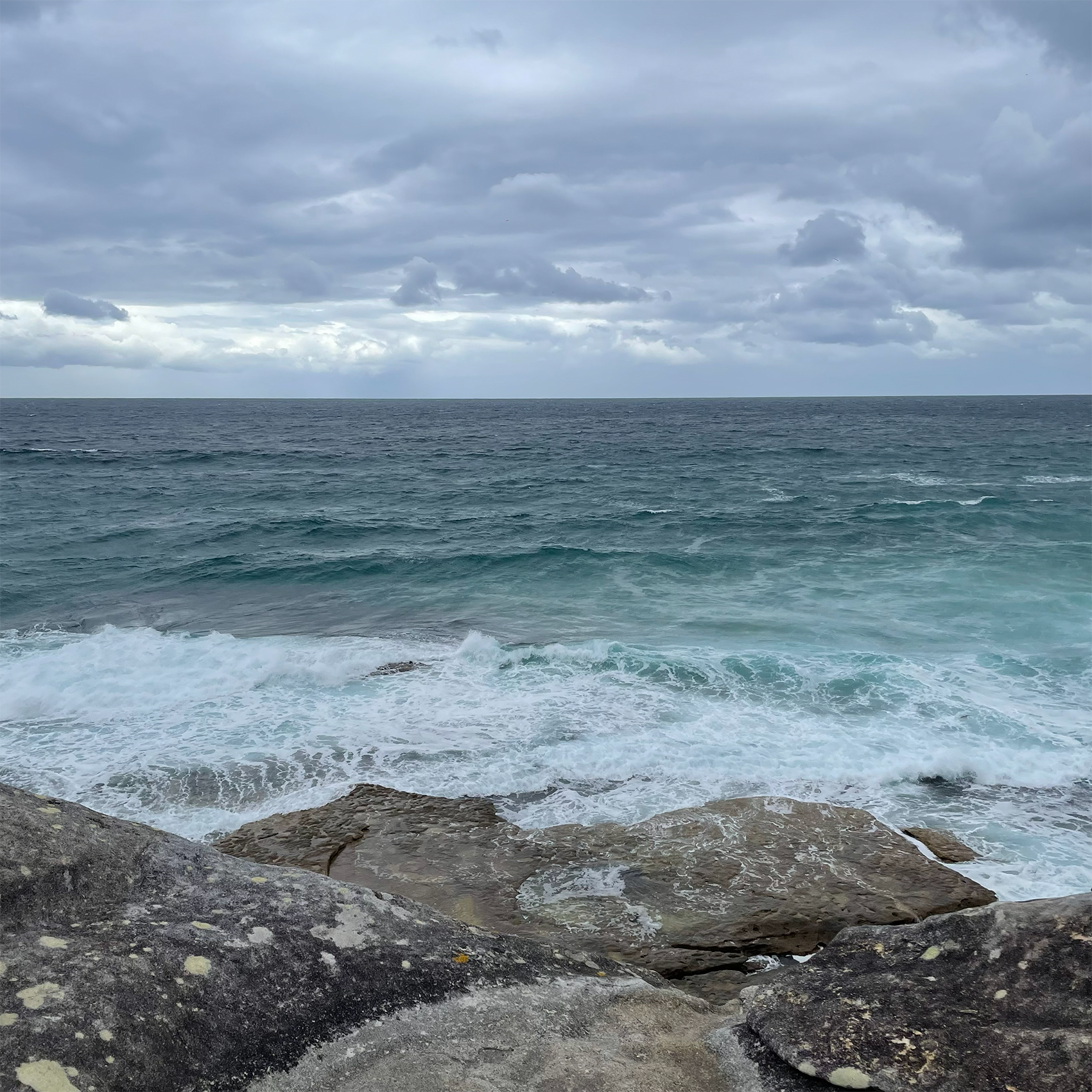
That is why I began to love the sea, the night, the stars, and rainy days. They are cool enough, quiet enough, and above all, there are very few people there.
II - Home
I was born in a small county town, into a family that was not particularly well-off, at least in my view. After I was weaned, because of work and other reasons, my parents did not have much energy to devote to me, especially my father. However, during my childhood, I had a fairly rich inner world. My mother was worried that I might run around outside and get into danger while they were at work, so she bought me many books, from picture books to classic novels.
I fell in love with reading. I loved the feeling that, simply by closing my eyes, I could follow the authors into the worlds they had created. I would often imagine myself as one of the characters in a book, trying to experience their emotions and thoughts. At times, I would also stand behind the protagonists, as if observing them from a distance. After I started school, whenever I received new textbooks, I would eagerly flip through them to read the stories inside. That was probably one of the few things that could make me interested in school.
Looking back now, my love of books during childhood may have been one of the reasons why I became relatively sensitive and delicate in thought.
Fortunately, my childhood was not occupied by books alone. Like most children, I loved going outside to play. I would run around with the children in the neighbourhood, making up games that belonged only to us. And, of course, there were video games. Similarly, when I was four or five years old, I spent a long period of time at my maternal grandparents’ home, together with my older female cousin, younger male cousin, and younger female cousin. In fact, I am more willing to acknowledge that it was my maternal grandparents who raised me until I finished primary school.
Because of this, I never developed much emotional attachment to my paternal grandparents or to the relatives on that side of the family. But I do not feel guilty about that.
According to my father’s own account, he grew up under a style of education built on physical punishment. In that era, there were no relatively complete laws concerning this matter. Even as I write these words now, it seems there still are not; and if there are, they are effectively meaningless. Whether a child was beaten or scolded depended entirely on the parents’ judgment. In a sense, parents were both the lawmakers and the enforcers within a family.
I believe this affected him deeply. And during my own years of growing up, both he and my mother, in turn, affected me deeply.
I do not think I was an especially naughty child during my childhood. But from the perspective of my parents, who came home after a long and exhausting day of work, perhaps I was.
I was beaten so many times that the specific reasons for each beating have become blurred in my memory. Objectively speaking, for some of the things I did, certain punishments may have been deserved. It is just that using violence as the method was perhaps somewhat extreme.
I remember one night when my mother came back from a business trip. Earlier that day, I had lost the key to our home that belonged to me. I did not think it was such a serious matter. I thought, even if someone picked up the key, how would they know which door it opened?
So before dinner, I sat on a dining chair, waiting for my father to pick up my mother and bring her home for dinner. When my mother walked through the door, her face was livid. She began scolding me loudly. The joy I had felt from waiting to welcome my mother after not seeing her for so long was instantly replaced by a huge wave of fear and sadness. The happiness on my face disappeared almost instantly, replaced by fear and sadness.
The next day, my mother seemed to have noticed something. She went to the supermarket and bought some snacks she thought I might like. After that, she did not say anything. Over the next few days, I slowly finished those snacks.
This seems to be a fairly common way for parents and children to reconcile, at least where I grew up.
There was another incident. Once, I had to complete a drawing assignment given by my teacher, and I needed to staple several of the drawings together. I asked my mother for help, hoping she could staple them for me. As luck would have it, the stapler was broken. She tried to repair it. Unfortunately, she failed, and the stapler broke completely.
Then, in great anger, she snapped the stapler in half and threw it into the trash.
The truth was, I had not angered her, so she had no reasonable way to vent those emotions onto me. My drawings were never stapled together. Even more unfortunately, she told me to go to bed with a face and a tone that were both suppressing anger.
I obediently went back to my room and went to sleep.
Another incident, which now feels both amusing and sad to me, had to do with honesty and deception.
During my primary school years, besides selling cheap snacks and drinks, the small shop near the school also had a popular kind of “gambling game.” It was essentially a square piece of cardboard with many little compartments on it. Inside each compartment was a paper slip that would tell you what prize you had won, or whether you had won nothing at all. It cost about ten cents to poke through one compartment and take out a slip.
I did not have much pocket money when I was young, but I was very willing to spend time in that shop before class.
That afternoon, the place was packed with children. I was not particularly tall among them, so most of the time, all I could see were other people’s backs. Under this “convenient” condition, and with a bit of luck, I casually picked up a paper slip from a pile scattered on the ground. It said, “One yo-yo.”
It was a bearing toy that was popular at the time.
I was extremely surprised and happy. For the child I was back then, it never occurred to me to search through the crowded shop for its original owner. I was not even sure whether I could exchange it for the prize. At that moment, an older child noticed me. He asked if I wanted to redeem the prize, and whether I had won it myself. I told him the truth: I had picked it up.
He said he could help me exchange it, but he wanted to play with the toy for a few days first. I said that was fine.
Unfortunately, I never got my toy back.
After several failed attempts to negotiate with him, I told my mother about it when she came to pick me up from school. As it happened, he was also leaving the school gate at that moment. My mother went up to ask him why he was holding on to the yo-yo and refusing to give it back to me.
I do not remember the exact conversation. I only remember him shouting loudly at my mother from a distance:
“That was stolen by him too!”
The whole way home, neither of us said anything.
After we got home, my mother called me to the balcony and angrily “interrogated” me, asking where exactly the prize had come from. No matter how I explained, I seemed unable to clear myself of the suspicion that I had stolen some other child’s prize slip.
So I went from choking back tears to sobbing, until my mother grew tired, or perhaps until she realized she could not get anything more out of me.
Writing up to this point, I am reminded of another incident.
Once, my mother took me out to attend a lunch full of adults I did not know. As I walked alongside her, I was enjoying the two pieces of beef jerky I had with me. On the way, we ran into a friend of mine, LHL, whose mother happened to be a friend of my mother as well. After a brief exchange of greetings, my mother took one of my pieces of beef jerky and gave it to LHL.
Although his mother politely tried to refuse, in reality, the beef jerky was already impossible to get back.
It was the piece I had deliberately saved for last. Whether from its appearance, or from the texture I imagined it would have based on that appearance, it was a perfect piece of beef jerky.
I actually had no objection to sharing. It was not about the money either. I simply could not accept that my mother had taken that piece of beef jerky without asking for my permission. What was even harder for me to accept was that, in order to calm me down, she lied and said there would be more beef jerky at the restaurant.
Disappointing.
During my last three years of primary school, before every summer and winter holiday, my mother would say that once the holiday came, she would take me skiing or to an amusement park. Obviously, over those three years, I never went to any of the places they said they would take me.
Whether those promises were made intentionally or casually, and whether or not work was truly the reason, they did break their promises. After I graduated from primary school, I no longer had much interest in any invitation from my parents to go out and have fun. I would rather go out with my friends, or simply stay at home and play computer games.
Later, whenever I brought this up half-jokingly and half-seriously, my mother would always say something like, “What do you mean we never took you? We took you to amusement parks many times when you were little. We even took photos.”
That is true. I have seen those photos. But I was too young then. Those moments are so far away that I have no memory of them at all.
From my parents’ perspective, I feel sorry that they missed the window of time when I could have shared pure parent-child happiness with them.
During those years, it was my younger aunt who took me and my younger cousin, her daughter, to amusement parks and ski resorts several times. After one of those trips, when she was sending me home, she asked my parents a question.
Although my parents answered her only with silence, and although they did not really change afterward, I still genuinely want to give that sentence full marks. It was a strike straight to the soul.
“Think about it. How long has it been since either of you last saw your child smile?”
Around the age of twenty-four, I began to firmly follow the principle of “to make no promise lightly, and to honor every promise I do make.” If I truly am not sure I can do something, I will honestly say that I am not sure, or I simply will not make the promise at all.
Even if the other person only wants me to say it for reassurance, and even if those honest words may disappoint them a little, I still believe this is better than making a promise and then failing to keep it.
I do not know exactly how trust between a child and their parents is built. But I can indeed feel how it changes.
There is not much I can say about my father, because during my childhood, he did not seem to pay much attention to me—at least on the surface. He always appeared in my life as a serious, severe, and unsmiling figure. I did not spend many happy moments with him during my childhood. In fact, most of my memories of him are of being scolded or beaten.
Even now, as I write these words, the way we communicate remains cold and sharp.
Before I became an adult, apart from what I personally experienced of his harshness, his temper, and the smell of alcohol on him, most of what I knew about him came from my mother. She seemed to treat me as an emotional outlet after conflicts between her and my father. I think she probably needed some comfort from me at the time. But unfortunately, I was too young then. And beyond that, I do not believe I should have been involved in their relationship. Even now, I still think the same. They had, and still have, the responsibility to handle the relationship between themselves.
The truth is, I did not have much energy for it either. Most of the time, I was trying to use the poorly soundproofed door of my room to force my attention onto my homework, rather than onto their loud and unrestrained arguments.
Oh, and sometimes all I had to do was lower my head and eat, actively filtering out the sound of their quarrels as much as I could. When there was no argument happening, the focal point would shift onto me. I would be compared with other neighbours’ children, or with the children of their friends and colleagues.
This directly led to the way I ate at home for the next ten years or more: very quickly, or by simply taking my food back to my own room. Perhaps this could be considered a conditioned reflex, an instinctive form of self-protection.
According to my mother, when I was very young, she and my father once had a bad physical fight. Even now, I still find it difficult to imagine, because in my mind, there are only fragmented pieces of memory surrounding that incident. I do not remember what caused it, and no one ever told me.
My mother said that my father came home drunk late at night, holding a pill for some illness, saying he wanted to give it to me (he believed it was a piece of candy). After that, they started arguing, while I kept crying. My father then picked up a kitchen knife and wanted to attack both me and my mother.
My father, on the other hand, never explained why the fight happened. He only showed me three fairly deep scratches on his face, left by my mother’s fingernails.
As for my own memory, all I remember are the sounds of things being smashed and the sounds of them arguing. I only remember my mother carrying me downstairs and taking me to her friend’s home. I only remember staying at that auntie’s place for a few days.
Perhaps the loss of the memory before my mother carried me out of the house was my brain’s protective mechanism at work. Or perhaps, somewhere deep in my memory, I really did see what happened that day. But I think it is better not to remember it.
Looking back now, I can still remember some of the reasons why my mother beat or scolded me. But for most of the times my father beat or scolded me, I can no longer remember the reasons. I only remember being beaten.
One of the most vivid memories is from a time when my older female cousin was at my house. I was beaten until I was rolling on the floor, while my mother and my cousin stood beside my father and watched.
Another time, I was made to stand by the wall in my parents’ bedroom. My parents sat on the bed and watched me. I have forgotten the exact reason why they were so angry. I only remember my father suddenly grabbing my neck. I was caught off guard and began coughing. Then my father said, “Go die!”
I said nothing.
They said nothing more either.
The next afternoon, my father came over to me and said, “Sometimes, when Mom and Dad say something in anger, it is only said in anger.”
I said nothing.
When I had just started middle school, my mother came to attend the first parent-teacher meeting. After it ended, she was chatting with my homeroom teacher. Right in front of me, she said to my teacher, “If this child does anything wrong, just beat him hard. He doesn’t hold grudges.”
I said nothing. My feelings were complicated.
At this point, I have to insert an incident from my university years. I was home for winter break, and it happened to be around New Year, when every household was celebrating. After dinner, my father went out drinking with friends. When he came back that night, unsurprisingly, he and my mother had another argument.
This argument ended with my mother slamming the door and leaving the house to take a walk and calm herself down. As she was leaving, my father was calling her on the phone. He looked up, saw me coming out to use the bathroom, and shouted at me:
“Are you satisfied now?”
I said nothing.
In my mind, I thought: what exactly am I supposed to be satisfied about?
When I was very young, I did not retain many memories. But one thing I do remember is that when my father or my mother was alone with me, they would ask me: if they got divorced, who would I choose to live with? And the answer from that little version of me was: neither of you. I would live by myself.
It was not that I had no feelings for my parents. On the contrary, I did feel attached to them, and I truly knew that they loved me. But that was exactly the most distorted part of this parent-child relationship. It was somewhat similar to Stockholm syndrome, though only somewhat. Across this vast land, people do not seem particularly good at expressing affection.
It seems that, for as long as I can remember, I had been consciously separating my feelings toward them, their feelings toward me, and the feelings between the two of them. I did not want to step in, to mediate, or to attempt to reconcile their arguments. As a child, I had neither the ability nor the impulse to do so. And when I finally became capable of it, I clearly refused it in my heart.
One weekend in high school, I went home and noticed that my father had been coughing violently and often. At that time, he seemed old to me, like a dry branch that might snap at any moment, still clinging to the tree. Interpersonal relationships, work, distorted family education, money, marriage — it was a tree tangled with too many elements of human society. I was somewhat worried about his health, but I did not say much. I only asked him, simply, why he kept coughing. He said he had caught a cold, and I felt slightly relieved.
I cannot directly say that I hate my parents, nor can I directly say that I love them very much. Here, I want to be more precise. Just as I separated my feelings toward them from their feelings toward me, I also separated my love for them from my hatred of them. If I did not do this, I am afraid my feelings for them would become too complicated.
I remember singing nursery rhymes to my mother when I was a child, after she came home from a long day of work. I also remember that when my mother was unwell and lying in bed, whether out of love for her or out of a child’s fear of losing a long-standing companion and relative, I would anxiously bring her some food and say things that I thought might make her happy.
To be honest, even as I write this, I still cannot describe what my love for them actually looks like. Language itself, or perhaps my ability as a writer, prevents me from precisely dissecting my feelings toward my parents. When it comes to them, I have had too many thoughts, some subtle and some intense, some filled with love and some with hatred. It is just that most of what I can clearly remember now is on the more painful and repressed side.
Perhaps one day in the future, I will understand it more clearly and add to this later.
III - School
My birthday is August 30. In 2005, the local policy required children to begin primary school at the start of September. Because of their work, my parents chose to send me to school that year. It was the final year in which the enrolment cut-off fell in September, which meant that throughout almost my entire time as a student, I was younger than nearly everyone else in my year.
It was not until the later stages of my education that I suddenly realised this might not have been an entirely good thing. Both physically and cognitively, I was developing slightly later than many of my classmates. I do not think the difference was especially dramatic, but it undeniably existed. As for the effects it had on me, I will return to them later.
For most of my school years, I was never considered an “excellent” student. In the classroom, two students would share a long desk, and I was constantly talking to whoever sat beside me. I found those conversations genuinely enjoyable. They became a kind of relief I had discovered for myself, something that separated me from both the oppressive atmosphere at home and the dullness of the classroom. From what I could tell, my deskmates were usually just as willing to talk to me. Naturally, this was exactly what the teachers did not want to see.
Every so often, they would deliberately place a quiet, introverted student beside me. What I find amusing is that every single one of them would gradually begin talking to me of their own accord. I could tell that they enjoyed our conversations. That continued until my homeroom teacher finally seated me alone beside the teacher’s desk.
I have to complain about this: more than ninety per cent of the classes I attended were unbearably boring. A dull adult would stand in front of a group of children and explain what should have been interesting, basic knowledge in language that only adults could understand.
It drove me insane.
It seems that I had already developed a serious habit of procrastination by the time I was in primary school. Whenever teachers assigned homework, I would leave it until the last possible moment. I chose to play after school first, even though I knew that I would enjoy myself more if I finished my homework early.
Whenever I sat down to do homework, it felt like a form of torture. From primary school onward, I would think of every possible way to avoid the work. By high school, I had even become accustomed to not handing in assignments at all. Looking back now, those tasks seem extremely simple, and my parents and teachers probably saw them the same way: how could something so easy take me so long?
This is a rather abstract idea, but perhaps it can be understood as a kind of growth. I believe pressure has always existed as something relative, almost like a ratio. As we grow older, gain more experience, and become more capable, the pressures and responsibilities imposed on us also become heavier. Because of that, the way pressure feels at each stage of life may remain almost the same.
“Labour is glorious.” That phrase followed me throughout almost all of my kindergarten and primary-school years. By “followed me,” I do not mean that my behaviour actually embodied it. I mean that I was constantly taught that I should learn to work and take pride in doing so. Unfortunately, as I mentioned earlier, I was a serious procrastinator, which, in practical terms, also meant that I was lazy.
In primary school, teachers assigned students cleaning duties every morning before class and every afternoon after school. In the morning, each class was responsible for cleaning a particular area of the school. In the afternoon, each student was assigned a particular part of the classroom.
How should I put this? I was often late in the mornings. There was no special reason for it; I simply could not get out of bed. More than once, by the time I arrived at school, the cleaning had already been finished, and sometimes class had already begun. I was, however, quite responsible when it came to cleaning the classroom after school.
Later, my teacher assigned me to stand at the school entrance with several other students, holding traffic signs telling drivers to slow down. I never skipped that duty. I quite liked passing the time by chatting and joking with the others while we held the signs. More importantly, it was the only task that gave me a legitimate reason to return to the classroom late.
As I mentioned earlier, I liked talking to my classmates during lessons, and I was often late for school. Unsurprisingly, my grades were not good. In fact, they were fairly poor.
That created another problem. In a country where academic achievement carries enormous weight, parents and teachers often treat a student’s grades as evidence of something larger. A child who performs badly at school may not simply be seen as unintelligent or lazy, but as undisciplined, badly behaved, or even morally deficient.
At first, when I reached this point in writing, I wanted to say that this was unfair to me. Then I thought about it more carefully. Even without considering my grades, I was frequently late, playful, and difficult to discipline. I did not exactly make a good first impression.
Still, one incident from that period continues to leave me with a sense of helplessness.
During a PE lesson, the teacher was organising a physical fitness test. After completing my own part, I sat on the ground to rest, with my legs stretched apart in front of me. Several girls who were close friends were waiting in line behind me. One of them, incidentally, was a girl I had liked since I first started primary school.
After finishing their tests, they ran away from the area together, laughing and playing. As they passed behind me, Shailene Liu pushed Sie Yu as a joke. Sie stumbled several large steps forward, caught her foot on my leg, and was almost thrown into the air before landing heavily on the ground.
I froze.
For a moment, everyone seemed to freeze.
Sie immediately began crying, and everyone’s attention turned towards her. I hurried over and asked whether she was all right. She did not answer, although her crying had already answered for her.
The PE teacher came over and asked what had happened. The girls said that Sie had tripped over my leg. No one added anything else.
The teacher helped her to her feet and checked her injuries. Sie could no longer move one of her arms.
Then the teacher asked whether I had tripped her deliberately.
I said no. I explained that she had run towards me and collided with my leg. That was genuinely what I believed had happened, because I had not seen Shailene push her.
After the lesson, the incident was reported to our homeroom teacher. She called Sie’s mother and asked her to take Sie to the hospital. When her mother arrived outside the classroom, I was called over and told to apologise.
I did not understand what I was supposed to apologise for, so I refused. I simply repeated what I knew had happened.
After Sie was taken to the hospital, the rest of the class continued with the school day. It was the final lesson before we were due to go home, but my homeroom teacher called me out of the classroom.
She began questioning me.
More accurately, she began interrogating me.
She had already decided that I had deliberately stuck out my leg and caused Sie to fall. I kept explaining what had happened and denying that I had done it on purpose, but nothing I said made any difference.
Why would she believe a little boy with poor grades who was often late and known for misbehaving?
Eventually, she said that she was going to call my mother to the school. Because I was afraid of my mother, I began to cry.
My mother arrived not long afterwards. By then, the school day was almost over.
A seven-year-old boy had been questioned by his teacher for forty-five minutes.
I no longer remember exactly what my mother and the teacher said to each other. I only remember that my mother was deeply apologetic about my supposed behaviour. When we returned home, she asked whether I had done it deliberately. I explained the whole incident again, and she did not question me much further.
Sie did not come to school for the next two days. According to our homeroom teacher, she had injured a bone.
I was called into the office again, although this time the questioning did not last as long. I cannot remember most of what the teacher said. The only sentence that has stayed with me is:
“She was injured that badly, and you still refuse to tell the truth?”
By then, the other teachers also seemed to have heard about the incident. I began to notice something like disgust in the way they looked at me.
I no longer remember how that made me feel.
Not long afterwards, my parents spoke to Sie’s mother on the phone. One evening, they took me to her home with money and gifts so that we could apologise in person.
While the adults talked in the living room, Sie and I played together in her bedroom as though nothing had happened. At some point, we were called out to join them.
My mother asked Sie whether I had deliberately stuck out my leg to trip her.
Sie hesitated before answering.
“No. Shailene pushed me, and that was why I tripped over his leg.”
When we returned home, I went to sleep as usual. The next morning, I went back to school as usual.
Later, my mother came to the school again. This time, she spoke with much more confidence. She repeated exactly what Sie had said at home.
The teacher seemed embarrassed, at least on the surface.
“Oh,” she said. “I didn’t realise that was what had happened. Little boys are usually mischievous and playful, while those two girls are normally so quiet. Neither of them took the initiative to explain what had actually happened.”
Shailene, the person who had caused the accident, never came forward. The teacher never mentioned her either.
She was also the first girl who had ever made me understand what it meant to like someone. Strangely, what happened did not change my feelings for her very much.
Even now, I am not sure how to judge the incident.
Or perhaps there is simply too much to say, and I do not know where to begin.
IV - Loyalty
My first friend at school was one of my primary school classmates, Waylon Zhu.
To me, he seemed extremely outgoing, which was almost the exact opposite of me. Among a group of children, his willingness to speak up quickly made him the centre of a small circle that formed around him. No one ever formally decided who the leader was, but everyone seemed to accept that it was him.
There were five or six boys in the group. During breaks, we would run around the corridors and play role-playing games based on cartoons we had watched, often ending up drenched in sweat after only ten minutes. Some of the games needed someone to play the villain, but none of the boys wanted the role. After all, who would not rather be the righteous hero who defeated evil? Still, because I wanted to fit in, I sometimes agreed to be the villain everyone chased.
My friendship with Waylon really began to grow after a teacher randomly rearranged the class seating and placed us one behind the other. From then on, we talked constantly, both during lessons and between them. On some weekends and school holidays, I would go to his home. We would skateboard around the residential compound where he lived and then have dinner with his family.
We talked about everything. We even told each other about the girls we liked. Sometimes we would sit in front of a computer for an entire afternoon, trying to finish a game with crude, blocky graphics.
He told me I was his best friend.
“Of course,” I said. “You’re my best friend too.”
That feeling of being chosen by each other was wonderful. Whenever I saw a pair of partners in a film, I would imagine that they were Waylon and me, working together to complete one mission after another.
In terms of personality, we could hardly have been more different, and perhaps that was why we worked so well together. We argued sometimes, but we always made up quickly, then went back to playing together and getting into trouble together.
Once, the other boys in the group had some kind of conflict with him. I no longer remember what it was about. I only remember that they called me out into the corridor and told me that I should stop playing with him. From then on, they said, they were going to leave him out.
I said no.
One of the boys pushed me. He could not understand my decision, just as I could not understand theirs. A teacher saw us shoving each other. After sending the others away, she brought the two of us together.
Very seriously, I told him, “I forgive you for pushing me, but I’m not going to stop playing with Waylon. He’s my friend.”
There was one more sentence in my head that I did not say aloud:
You are my friends too.
The group did not fall apart after that. The others did not hold anything against me, although there was still some distance between them and Waylon.
Eventually, we all graduated and went to different middle schools. Waylon and I ended up at the same school, but in different classes. At the beginning of the school year, we met again. He introduced me to Bowen, a new friend he had made in his class, and we had lunch together in the school cafeteria.
It was the last meal we ever shared.
Waylon’s class was next to mine. He was in Class 3, and I was in Class 4.
Not long after the school year began, we had an English test. There was nothing particularly difficult about it. We were simply asked to copy printed letters and write out a few basic English number words. The purpose was mainly to make sure that our handwriting was neat and legible. I took it seriously, partly because I wanted to do well, and partly because the test was so easy that it hardly felt like a test at all.
In fact, our teacher did not even intend to mark the papers herself. Instead, she had the students in Classes 3 and 4 mark each other’s work.
After Class 3 had finished, Bowen came to the door of my classroom and found me. He told me that Waylon had marked my paper. At first, I felt pleased. I assumed that meant I would receive a high score.
Then Bowen told me that he had seen Waylon deliberately look for my paper, alter some of my answers, and give me a low mark.
I did not believe him at first. Then I saw my paper. The letters I had written so carefully on a clean sheet had been crossed out and altered so heavily that I could barely recognise it as mine.
I found Waylon and demanded to know why he had done it, but he denied everything. I then went to the English teacher and told her what had happened. She said she would look into it.
Nothing came of it.
I was too naïve at the time to consider what confronting Waylon directly might mean for Bowen, who had been the one to tell me. Nor did I spend much time wondering why Waylon might have done it. All I knew was that something unfair had happened, and my teacher had done nothing to set it right.
A little distance began to grow between Waylon and me, but our friendship had not truly ended yet.
Middle school covers roughly the years from eleven to fifteen, an age when boys and girls often begin to develop romantic feelings. Waylon and I were no exception.
In my first year of middle school, I sat beside a pretty girl named Quinn Wong. Like most of the classmates I had shared a desk with, she and I got along well and talked often. One day, Waylon told me that he had started to like her. He asked whether I could pass notes to her for him, and I said that I could.
For a while, that was all I did. I carried his messages to Quinn and told Waylon how she responded. Quinn, however, had no interest in him. She found his attention irritating. I did not fully understand why at the time, but I told him honestly how she felt.
Eventually, Waylon could no longer keep his feelings to himself. He asked me to bring Quinn into the corridor during a self-study period, when no one else was around, because he wanted to confess his feelings to her.
I agreed. I went back to Quinn and told her directly that Waylon wanted to confess to her. By then, she had also reached her limit. She was tired of what felt like harassment that might otherwise continue indefinitely, so she agreed to go outside with me and end his one-sided pursuit once and for all.
I brought a visibly angry Quinn into the corridor, then went to call Waylon out. He came towards us smiling, but the moment he saw the expression on her face, his smile gave way to confusion.
“What do you want to say?” Quinn asked impatiently. “Say it now.”
Waylon looked puzzled and denied that he had ever asked me to bring her out.
I stood between them, staring at him in disbelief. Quinn turned around and went back into the classroom.
Fortunately, she did not believe him. She simply found him even more unpleasant than before. The word she used to describe him was “disgusting.”
That evening, Waylon called me to talk about what had happened. He behaved as though he had done nothing wrong. He explained that, in that moment, denying everything had been the only way to preserve Quinn’s impression of him.
After that, Quinn totally ignored Waylon.
As I said, I had someone I liked too: my classmate, Sherry.
Sherry was cheerful, energetic, and naturally outgoing. She was our class sports representative, and she seemed able to get along with everyone, carrying happiness with her wherever she went. I was deeply drawn to her. She was like a music box wound all the way up, seemingly incapable of tiring. Seeing her each day, or simply hearing her voice, was enough to catch my attention and briefly wash away whatever had been troubling me.
Eventually, I found an opportunity to tell Sherry how I felt. She said that we could be very good friends. I understood that this was a rejection, but at the time, I was not asking for much. I had managed to gather the courage to tell her that I liked her, and she had received my feelings gently. That alone was enough to make me content.
This happened a few months after the incident involving Quinn. I still believed, somewhat naively—or perhaps simply foolishly—that Waylon and I remained friends, or at least that we would not deliberately betray or set each other up.
A few days after I confessed my feelings to Sherry, I told Waylon about them during a conversation. He said he was deeply moved and thanked me for still trusting him.
“Do you remember what I said when you were almost excluded from the group in primary school?” I replied. “We’re friends.”
The following afternoon, shortly before class began, Sherry came out of Waylon’s classroom. It was obvious that neither of them had returned to the dormitory to rest during the lunch break.
When Sherry entered our classroom, I smiled at her. She pointed at me and said two words.
“Despicable. Shameless.”
I had no idea what had happened, but my mood collapsed instantly. I went to Waylon and asked what the two of them had talked about during lunch.
“Nothing,” he said, looking completely puzzled. “We didn’t talk about anything.”
I said nothing. I simply looked at him for a long moment.
After that, I never spoke to him again, just as Quinn had stopped speaking to him before me.
As for Sherry, she blocked me on every platform and never gave me a chance to speak with her alone about what had happened. I was never able to learn the truth. Although her attitude towards me softened somewhat over time, I felt that, in her mind, I had already become someone contemptible.
Over the next few years, I forced myself to let go of my feelings for her. It was not easy. More than a decade has now passed, and whatever affection I once felt has long since disappeared. Even so, I still find myself wanting to ask her what happened during that lunch break.
It is no longer really about Sherry, or even about Waylon. What remains is the unanswered question.
Part of me is still trapped in that afternoon, waiting for an answer that she may no longer remember.
Interlude
V - Ordinary Days
I've thought about it for a long time: where should I begin with this person? As a childhood friend who has known him for sixteen years now, I basically know everything about him. And he knows me just as well.
He and I met not long after starting school; we were in the same class. Back then our middle school had a class with a foreign teacher every few days, taught by a lovely old lady named Polly. She gave us a list of names to choose from in her class, and that is where the name Daniel came from. He still uses it now, in 2026.
In my eyes, in his younger years he was an idealist. Because his family was relatively well-off at the time, and his family atmosphere was harmonious compared to mine, I often felt some of his ideas were too naive, and it made me a little insecure. Or rather, that insecurity came from tracing some of his ideas back to their source. Daniel's mother was very gentle — back then, she was even my ideal image of a mother. I could see how well she protected (or cared for) Daniel, and maybe that was one of the reasons I liked spending time with him so much.
In middle school I carried on my primary school habit of talking a lot — it even got worse. I was used to speaking up in class whenever I felt like it, and I enjoyed it, never caring whether I interrupted the teacher. But most of my classmates didn't mind, at least as far as I could tell, because I wasn't making weird noises to get attention. My role was more like the supporting partner in a xiangsheng act — the one who chimes in — so my remarks always had everyone laughing out loud. Those were probably my most lively and quick-witted years. Daniel never had the nerve for that, but after class we talked endlessly and got along perfectly. You could say he filled the role Waylon had left empty. Every day after school we walked together. I took the bus home, and he would walk me to the stop and stay until I got on. Sometimes we also lingered near the school for a long time, talking, eating snacks and ice cream, until the very last bus. His grades were pretty good, and I liked to slack off, so I loved copying his homework. At noon, during the midday rest in the classroom, neither of us could sleep, so we would try to make each other laugh with several classmates sitting between us.
Like most friends, we naturally had our moments of friction too. Ours was over a girl, though it wasn't as clichéd as in the movies. When a lot of my friends look back on their romantic histories, they don't count the ones from before adulthood. But I think a relationship is a relationship — there's no such thing as "we were too young for it to count." So strictly speaking, I've been in seven relationships, and the first one started in middle school.
Chloe and Katherine were a pair of close friends, just like Daniel and me. Daniel got together with Katherine, though years later he would not admit it. And since Daniel and Katherine often walked together, Chloe and I ended up tagging along with the two of them. Over time, Chloe and I developed some feelings for each other, though back then it was nowhere near enough to actually become a couple. One day after school, Daniel and I were walking and talking, and he said I should get together with Chloe. He thought that two pairs of friends becoming two couples would be a truly wonderful thing, and I agreed it sounded pretty good. Soon enough, this wonderful thing came true. But the wonderful part didn't last long. As I got to know Chloe more deeply, I found there was no point in our two personalities even trying to adjust to each other. She was extremely forceful, and at that time I was far too indecisive. I couldn't accept a partner that forceful — I always felt like I was being led around. So I broke up with Chloe. I could tell she was very angry, and I felt truly sorry for her. About five years later, Chloe and I were classmates again in high school, and the very first time she saw me, she still asked, "Why did you choose to break up back then?" I answered honestly, "I felt our personalities weren't a good fit."
Writing up to this point, I think that maybe, in some sense, between Chloe and me, I played the role that Sherry had played in my eyes.
After that breakup, I kept talking with Daniel after school as usual. One time we talked about my relationship with Chloe, and I asked him why, back then, he had thought Chloe and I should be together. He answered: because I liked Chloe.
What I felt at that moment is hard to put into words. Even now I still can't figure it out. But I no longer have the heart to ask — it's all in the past, and it seems everyone has made their peace with one another. That counts as an episode in my friendship with Daniel: I don't understand it, but I won't dig any deeper.
Writing this and looking back over everything I've written, I feel a bit low. Why do I always remember these strange, heavy things so clearly?
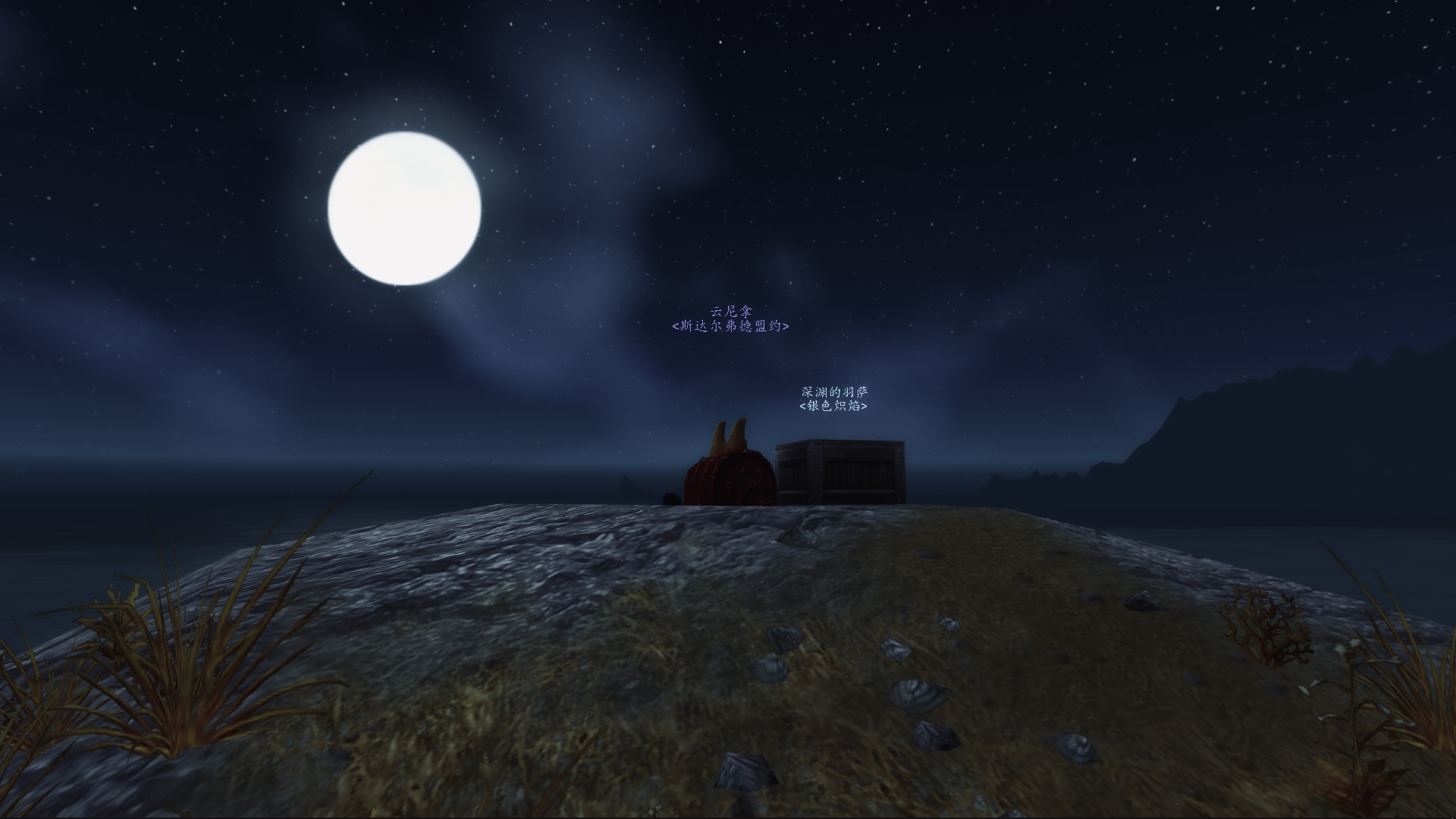
In our second year of middle school, Daniel introduced me to World of Warcraft. In fact, he spent a long time persuading me to play it with him, and that was how I got my ID — Oldghost5412.
The game required you to buy game time. Back then, this pay-to-play model almost completely drained what little pocket money I had, and I couldn't just openly tell my parents at home that I wanted to play games. So I had to go to great lengths to find time to play with Daniel at an internet café. Daniel's mother, on the other hand, was herself a hardcore player of the game, so Daniel could play at home without any trouble.
One incident left a particularly deep impression on me. I was at Daniel's home that day, and in the evening, when it was time for me to head back, his parents drove me home together with him. Daniel quietly told me that after getting out of the car, I could stop by the internet café near my home to buy a top-up card. I agreed. But when I said goodbye to his parents and walked up to the entrance of the café, Daniel sent me a message: "Don't go in." I froze for a second. Then another message came: "My parents are watching you." At the time I was puzzled — why shouldn't I go in?
Most parents' impression of internet cafés was still stuck in the early 2000s: a hangout for drifters and criminals.
In the end, I didn't go in, even though Daniel and I both knew I was only going in to buy a top-up card. The whole thing must have looked quite comical to his parents.
He was always trying, by his own judgement, to play the role of the "good kid" in his parents' eyes (in my own family, I was the exact opposite). Perhaps that was why Daniel wanted me to leave the same impression on his parents.
At some stage in middle school, Daniel and I had another mutual friend. Even though I really tried, I still found it hard to get along with him. We played computer games together, went out to eat together, played board games together — the three of us even took a trip to Mount Tai. But later, by some quiet mutual understanding, we slowly lost touch.
Back then I noticed that offline, whenever I was with more than one person, my desire to express myself dropped sharply, and I felt less at ease. When it was just me and one other person (or just myself), my thoughts became clearer instead.
Interlude
I have a chronic condition. When I woke up on the morning of the 21st, I found that it had come back. It hasn't flared up this badly in a long time — this is the first time in over a year. I'm actually not even sure what this illness of mine is called. Going by GPT's best guess, myofascial pain syndrome seems to fit closest.
In my third year of middle school, I got a stiff neck. For the week after it appeared, I kept trying to turn my neck to fight against its stiffness. And maybe it was precisely because I did that: once the ordinary stiff-neck symptoms faded, I found that my neck felt extremely tight and sticky (I find it hard to describe what this sensation actually is). I had to keep lowering my head or tilting it, pulling at one of the tendons at the back of my neck, just to get a little relief, and each pull came with a crisp little crack. My parents were the first to notice. They thought I had picked up some hoodlum habit. After I explained the situation, my father took me to the hospital. The X-ray showed everything was normal, and the doctor at the pain clinic said the cracking was a good thing. But I had never had anything like this before. My father gradually settled on blaming my sitting posture when I did my homework.
I always believed it was an incurable disease. I even once thought I was paying for the bad things I had done. In high school, I tried electro-acupuncture, acupuncture with bloodletting, medicated plasters, and massage. None of them worked well — you could even say they did nothing at all.
The worst episode was probably in Milan in 2022. It was summer. I was preparing my portfolio for school applications when my back condition suddenly turned severe. Every breath pulled at the nerves near my shoulder blade. I could only lie face down on the bed, completely still, not daring to breathe deeply.
A friend once asked me, "When does it usually hurt, your neck and that spot by your shoulder blade?" I answered, "It's not really a pain — at least not the pain of a skin wound or a stomachache. It's more like some muscle in your back has cramped up. As for when it hurts, all I can say is: every minute, every second. As long as I'm still breathing, it's at work on me. Only the degree changes." That is exactly how it is. I'm not exaggerating one bit.
I used to be a somewhat hot-tempered person. After getting this illness, I once thought it would set my temper off completely — but the opposite happened. Like an ascetic monk, I have been cultivating my temper through the torment of this illness. Sometimes the pain is intense, but my face stays calm, because I know that even if my face twisted in pain, it would do nothing for my back. I just don't want this illness lowering my emotional threshold and spilling over onto the people around me.
I hope that once tonight is over, I can start getting better soon. And of course, it would be even better if one day I could be well for good.
00:48, July 22, 2026
V - Ordinary Days
Back to Daniel. In high school, the two of us were at the same school but not in the same class. After our first year, the school re-sorted everyone into new classes based on grades, into three broad types: the arts class, the regular class, and the advanced class. The arts class and the advanced class were the school's tools for pushing up its university admission rate. In the vacation after my first year, I chose to take up art training and go through the gaokao — China's national university entrance exam — as an art student, so I was placed in the arts class, while Daniel, with his good grades, was put in the advanced class. Our paths crossed less and less, but our bond didn't really fade.
In the vacation after our second year, after talking it over with his family, he decided to give up the gaokao and go to New Zealand instead — language classes, a foundation year, then university. And so, as his classmates watched on with envy, once he had his high school diploma in hand, he left early.
Before he left, we had a meal together. I had a feeling that this parting meant he would be gone for a long time. When we said goodbye, I didn't say much. I held the bottle of drink we had bought together, took a sip, and watched him cross the road and get into a taxi home. I can't even remember whether I waved. Maybe I knew we would see each other again, so I didn't feel much of a tremor inside.
Years later, Daniel's family went through a financial upheaval, and he came back to China. In between, we stayed in touch on and off — sometimes going to the seaside to watch the sunrise, sometimes going out for hotpot, more often playing computer games together. Later still, he chose to repeat a year at a high school and take the gaokao, living through the final-year life he had never had.
For various reasons, a year after I finished my bachelor’s degree, he had only just started university. And when I had taken a two-year gap and then finished my master's, he had only just graduated. And so, we gradually set out on our own storylines. As of today, I have just finished my master's, and he has chosen to learn German and then go to work in Germany. I don't know whether he will make it. He has been studying for over half a year and should have passed the exam by now, but in truth he has been playing games the whole time. I hope that in the next half year he can pass smoothly. I don't want to judge whether what he does is right or wrong, because too many bad things have happened to him and to his parents that I have not written about.
To be honest, my relationship with Daniel has mostly been a running account of ordinary days. I haven't found many anchors that felt worth recording. It is the little things, one by one, and the time we spent together, that have slowly built up into the relationship we have now.
Whether or not he succeeds in the conventional sense, I hope he can become the Sisyphus of his own life.
VI - High School
Nine-year compulsory education covers primary school through middle school. Most people consider vocational high schools to be pretty terrible.
My score on the zhongkao — the high school entrance exam — was nothing to be proud of. In my hometown there were only three high schools: a good one, which admitted few students; an average one, which admitted plenty; and a vocational high school, usually where the students with the worst grades went.
I was admitted to the average one right at the cutoff line. How do I know that? In the first placement test after enrollment, out of more than 2,500 students in my grade, I ranked around 2,300th. The students ranked below me were all sports students. And so, just as in primary school and middle school, I became a bad student again.
In my first year of high school, we had one day a week, Sunday, to go home and rest. The rest of the time we had to stay at school and in the dorms. Before high school, I had never attended evening study sessions. They were torture for both mind and body: from six-thirty to ten-thirty, four full hours, sitting upright at my own desk doing homework — it felt worse than being killed. To escape evening study, I copied some of the older students and went to the school infirmary to get IV drips. They were basically all glucose.
Once during study hall, my homeroom teacher caught me sleeping and sent me straight home, telling me to come back after I had slept enough. I didn't argue. I took the leave slip he gave me and went home to sleep.
I think that when a person is doing something they are good at, they don't feel tormented. Those students with good grades must genuinely enjoy the process of studying.
My grades in the science subjects — math, chemistry, physics — were all terrible. The worst time, I got five points out of a hundred on a physics exam. And that was the only time I ever cheated in my entire life: I had copied physics formulas onto my desk, but when I picked up the exam paper, I had no idea how to use any of them. After that, I gave up on homework completely. I simply could not enjoy studying. The one bright spot was English: answering only the multiple-choice questions, I could still rank near the top of my class. I was too lazy to write the rest.
After the class reshuffle, I entered the arts class without any trouble in my second year of high school, and there I met an old friend, Lee. Strictly speaking, he is the friend I have known the longest — we met back in kindergarten. But we only really grew close in my second and third years of high school. We often walked together from our classroom to the school's art studio for lessons, ate lunch together, and talked together. Relationships during our school days were simple like that.: you never had to do anything deliberate, and the bond naturally grew closer.
In the summer vacation after my second year, as an art student I had to spend about half a year in intensive training to prepare for the art exam. Instead of staying at school, I went to the off-campus studio where Lee was.
Of course, some other students went to that off-campus studio too, including Lee's girlfriend, who was from the other arts class. A girl completely unable to control her emotions — or rather, she had no intention of controlling them. Lee, though, was quite fond of her.
To be honest, I didn't like painting all that much. Not because I "disliked" it, but because I was too restless to paint the way I wanted. Lee, sitting next to me, could always keep his patience, and watching him settle in so calmly made me even more restless.
Half a year later, the unified art exam began. There were a lot of candidates. I wasn't as nervous as I had imagined; the whole exam ended quickly, and the results came out quickly too. My score landed just above the "excellent" cutoff — exactly the same as Lee's. This left Lee thoroughly frustrated. He felt that, given his level, his score should have been higher than mine. I didn't think so. Afterwards, I often teased him about it.
After the unified exam, there was another round: the school-specific exams, separate art tests organized by individual universities, usually the better ones. Many classmates had gone back to school to prepare for the gaokao, but I didn't want to go back that early — I didn't want to study — so I spent two more months traveling from city to city taking these exams. As expected, I didn't pass a single one.
There was one small episode, though. In one of the school exams, the morning session covered quick sketches and pencil drawing, and the afternoon session was color. Quick sketching was my weak point. So after the morning session, I didn't even want to go to the exam hall in the afternoon, because I knew my sketch score would be very low and I basically had no hope of passing. After thinking about it for a long time, I decided to go anyway. Once the exam started, I completely let myself go: I painted however I wanted, without worrying about the result. Not long after, the scores came out. My color score was unexpectedly close to full marks, which meant that if I had taken the pencil drawing or the quick sketches even slightly more seriously, I would have passed the exam and received a conditional offer. What a pity. Or maybe not such a pity.
Back at school, there were three months left before the gaokao. By all logic, I had to start preparing for the exam. My heart still wasn't in it.
In fact, my attitude and my way of studying had never changed. But ever since my second year began, my grades had stayed near the top of my class, which even led some classmates to suspect for a while that I got my good grades by cheating — because I didn't really listen in class and didn't really do my homework.
But after I came back from the school-specific exams, I could clearly feel that the ease of scoring high was slowly slipping away. I can say with complete certainty: if the gaokao had been delayed by one month, my scores would definitely have gotten worse. Fortunately, in the end I graduated with excellent grades and entered the university I had hoped for.
Here, I truly want to thank my homeroom teacher from my second and third years, Mr. Yin. In the first exam of my second year, after the rankings came out, he stood at the front of the classroom and read them out one by one. When he reached me, he said, "Fifteenth place." I was astonished — I had assumed I was still somewhere near the bottom. That gave me a flicker of interest in studying; I no longer resisted studying and exams so much. In the series of exams that followed, my grades gradually rose to the top of the class. Until one day, by chance, I saw the ranking sheet from that first exam. I was thirty-fifth.
It is hard to describe how I felt at that moment. I don't know whether Mr. Yin misread it on purpose or by accident, but it genuinely changed my attitude toward studying. You could say this one thing made me more at ease when facing everyday study and exams.
He was one of the few good teachers I met in my school years. About this teacher, this one thing is enough.
When I was moving up from primary school to middle school, I was a little afraid of the new environment. I couldn't let go of the primary school I had known for five years, and I worried about having to make friends with strangers. I didn't know how to make friends. (In fact, I still don't know. Everything seems to happen naturally — so naturally that I cannot put into words how any of my relationships came to be.)
But with every move up after that, I came to look forward to it, because it meant that in the new environment, very, very few people would know me. Without my noticing it, I was gradually beginning to like going to places where no one knew me. In that new place, I could be a brand-new version of myself. And of course, I also had the right to remain the self from the previous environment.
In primary school and middle school I was fairly mischievous. In high school I became somewhat rebellious. By my undergraduate years I had grown rather reserved, and even more so during my master's. I quite like this feeling of not knowing — who knows what I will be like in the next stage? But whatever I become, every experience I have been through, every choice I have made, and all of my thinking have shaped "me." Just as one learns to accept fate, I have learned to accept myself.
VII - Scars
"Men at their birth
are naturally good.
Their natures are much the same;
their habits become widely different."
—— Three Character Classic
I don't want to judge whether these words are right or wrong.
In the next few chapters, I would like to talk about some of my scars.
There are three scars across my face and forehead. They date from three different periods of my life: infancy, childhood, and adolescence.
I was born prematurely and had some problems with my heart. Not long after I was born, I also underwent a minor operation, although it was unrelated to my heart. I needed an intravenous drip during the procedure, but because I was so small, the doctors had to insert the needle into a vein in my forehead. It left a mark that grew larger as I grew. I was also told that the oxygen I received during the operation contributed to the astigmatism in my eyes.
The scar on the left side of my face came from an accident while I was playing. I must have been five or six years old. Late one night, I was running around with some friends when I tripped over one step and struck my face hard against another.
The impact left me dazed. I instinctively touched my face and felt one of my fingers slip inside it. It was warm and hollow. There was a hole in my cheek.
One of my friends ran to tell the adults, who were talking some distance away. Another child’s parent drove my mother and me to the hospital, where the wound was stitched without anaesthetic. I remember very little of the procedure. I only remember the doctor sewing my face and repeatedly asking me, “Does it hurt? Tell me if it hurts.”
“It hurts,” I whimpered.
I stayed home from school for some time afterwards. Occasionally, at night, I would hear my mother speaking to someone on the phone. I could never make out what she was saying. I only remember that she was crying as she spoke.
Another scar overlaps with the one on my forehead. Its origin is almost embarrassingly ordinary: one day, on my way to school, I walked into a tree. The injury was not serious, but it left a mark.
I seem to have had a rather accident-prone childhood, particularly between the ages of four and eight. We lived on the fifth floor of an apartment building. One day, my father had left for work and my mother was at home looking after me. While she was cooking, I dragged a chair onto the balcony, climbed onto the windowsill, and began opening the flyscreen so that I could look outside.
According to my mother, she came out of the kitchen, saw me, and immediately kicked off her slippers so that the sound of her running would not startle me. She rushed over and lifted me down.
I do not remember that part. What I do remember is what happened afterwards. To punish me, she held me outside the window and made me look down. I suspect that this may be one reason I am somewhat afraid of heights.
There was another incident when I was in my first year of primary school. After classes ended, I began crossing a road close to the school gates just as a heavy truck was approaching. It was probably the closest I have ever come to dying.
The truck stopped only a metre or two away from me. I then lay down on the road—not because it had hit me, but because fear had made my body collapse almost automatically.
Most of this comes from my mother’s account. My own memory is limited to her holding me in the middle of the road while a police officer nearby took photographs of me.
There are scars that cannot be seen as well.
I often wonder about the influence an environment has on a person while they are growing up. Everyone has both good and bad in them, but how much of what eventually emerges is shaped by the world around them?
I was bullied more than once. It followed me from primary school into high school.
One afternoon in my fifth year of primary school, I was standing in line after classes, staring into space, when someone suddenly kicked me hard in the back. I swear that I had done nothing. I had simply been standing there.
When I turned around, I saw Zeke, a boy from the class next door. At first, I assumed it was some kind of joke, although I was still angry. I searched around for him and eventually found him beneath a basketball hoop, standing with his back to me while talking to several other students. I ran up, copied what he had done to me, kicked him once, and ran away.
Ten minutes later, he found me. He kicked me, then wrapped his hands around my throat.
As I mentioned before, I was one of the youngest children in my year. Zeke seemed very tall to me, and I could not break free. I tried to pull his hands away, but I was not strong enough. Tears caused by the lack of air blurred my vision. It was only when his homeroom teacher slapped him and dragged him away from me that I was finally able to breathe again.
I sat on the ground, sobbing. One of my classmates stayed beside me and slowly walked me out of the school grounds.
At the time, I could not understand why Zeke had done it. I had barely ever spoken to him.
And then the incident simply passed. The next time he saw me, he did nothing. I did nothing either. Occasionally, we would only look at each other.
Zeke and I later attended the same middle school. Before long, a group of boys began moving around the school together. They called themselves Black Flag, or something similar, and Zeke was one of the boys at the centre of it.
My homeroom teacher during my first two years of middle school once said to me:
“You can’t do well in school, and you can’t even make it as one of the tough kids. What exactly are you?”
I began to question myself.
She was right, I thought. Why couldn’t I manage either?
Zeke later began dating a girl who once borrowed a comic book from me. He saw it happen. Perhaps out of jealousy or possessiveness, he called me into the corridor during a break and asked whether I liked his girlfriend.
I said no. It was the truth. She was not my type.
As he spoke, he pressed his chest against my face, steadily forcing me backwards until I was almost pushed down the stairs. Then he raised one hand and lightly slapped my cheek several times.
“Stay away from her,” he said.
He really was tall and heavily built.
One afternoon, I was alone beside the school cafeteria, topping up my student card, when someone suddenly kicked me in the back again. I turned around and saw a student I had never met before. His name was Wong, and he was one of the boys from that group. He was not particularly tall, but he was heavy and strongly built.
We began fighting and continued for quite some time before a teacher finally pulled us apart. We were taken to the office, and our parents were called. My mother came, while Wong’s parents said they did not have time.
I explained what had happened once again. My homeroom teacher, Miss Zhu, and my mother gave almost exactly the same response:
“Fighting is wrong, no matter what. And why did he choose to cause trouble with you instead of anyone else?”
There was something deeply dark about that question. How was I supposed to know why he had chosen me?
Miss Zhu struck each of us fifty times across the palms with her disciplinary ruler.
Not long afterwards, a boy who was slightly shorter and thinner than me approached me during a break and casually put his hands around my throat. I became angry and threw him to the ground. His glasses fell from his face and slid across the floor.
Miss Zhu saw what happened. Startled and furious, she ran over and demanded to know why I had done it. She told me to apologise immediately.
I explained that he had grabbed my throat first.
“I didn’t see that,” she said. “I only saw you throw him to the ground. He’s so much smaller than you. Why would he be the one to start trouble?”
I refused to apologise. In my mind, I had done nothing wrong, so I had no reason to say sorry.
For some reason, however, I did not say that. Instead, I said, “I’ve never apologised to anyone in my life.”
That was not the point, and I knew it. I should have held to the simple truth that he had provoked me first, rather than allowing the argument to become about whether I was willing to apologise.
In the end, I apologised anyway, crying with anger and humiliation.
Writing this now, I feel deeply sorry for the child I was then.
My second fight with Wong happened in the school playground during my second year of middle school. I was walking ahead when I noticed someone repeatedly stepping on the backs of my shoes. I looked behind me and saw Wong. I ignored him, but he continued. I turned around to look at him several more times, and that seemed to irritate him—as though he were thinking, How dare you even look at me?
He kicked me several times. Just as I became angry enough to turn around and fight him, several members of Black Flag stepped between us. Two of them moved me behind them and shielded me.
When I returned to the dormitory at lunchtime, I was called into one of the rooms. It was packed with members of Black Flag. No one said anything.
After a while, Zeke slapped me across the face.
Another boy, Bin, immediately became angry.
“Why did you hit him?” he demanded.
Zeke said that he was protecting me.
Bin was a decent person. In truth, we did not spend much time together, but during those middle-school years, he helped me on several occasions. Like Zeke, he was tall and strongly built, but for some reason, he seemed to enjoy talking to me. There was another boy who often looked out for me as well.
I will not go into much more detail about Bin or the other boy here. For the rest of middle school, no one seriously bothered me again.
Sometimes I cannot help wondering whether there was something particular about the way I carried myself—something that made strangers attack me for no apparent reason, while also making their friends protect me for reasons I understood just as little.
There were two people whose situations were even worse than mine. One was Vincent; I have forgotten the other person’s name, so I will call him Eight.
I found it hard to feel much sympathy for Vincent when he was beaten. He was the type of person who constantly borrowed money and never paid it back. He would promise high interest rates to persuade people to lend him money, spend it extravagantly, then use the same excuse to borrow even more in order to repay his previous debts. It was basically a middle-school version of borrowing to repay borrowing.
Vincent was very good at math, but he failed to calculate that all his creditors were nearby. Once, he borrowed money from me. I told my cousin, who attended the middle school next to ours. I was not trying to cause trouble—I simply mentioned it to him in conversation. The next day, my cousin and several of his friends came near our school, called Vincent outside, took him to a bathroom, and beat him until his face was covered in blood.
That was the first time I experienced what it felt like to “know someone.” I did not like it very much, but in that environment, it felt necessary.
Not long afterward, after repaying me, Vincent was beaten several more times over money. His father came to the school carrying a backpack full of cash. He found every student Vincent owed money to and paid them back one by one. Then he arranged for Vincent to transfer schools. I never heard anything about him again after that.
As for Eight, I do not remember him being beaten very often. During my third year of middle school, we were roommates in the dormitory. I was not close to anyone in the room because none of them were in my class. Eight was thinner and more fragile-looking. He seemed very honest and quiet.
Why do I say that his situation was much worse than mine?
One day in the dormitory, shortly before our afternoon nap was about to end, a group of people rushed into our room. They held Eight down, pulled off his pants, and played with his genitals, trying to make him ejaculate, while he looked terrified. Worse still, it happened more than once.
I sat silently on my bed and watched.
I know it was horrible. I often think about how deeply it may have affected the rest of his life. But at that time, not joining the others in laughing was already the most I felt capable of doing.
Was that cowardice? Maybe.
There was another time when a classmate of mine was beaten. I took him to the teachers’ office. Later, his injuries were serious enough that he had to be hospitalized. While he was in the hospital, the people who had beaten him called me over and asked whether I had told the teachers, because someone had seen me taking him away. I said that I had not told them.
Was that courage? Maybe.
My left eardrum was once perforated. That happened in middle school as well, shortly before graduation.
Daniel’s classroom was next to mine. One day during a break, I went there to find him. A boy named Jaces deliberately tripped me. When I stood up, he tripped me again. I got back to my feet and swore at him. He stepped backwards, raised his leg, and struck me directly on the left ear with a high roundhouse kick.
The force snapped my head sideways into a protruding corner of the wall. The right side of my forehead began to swell immediately. I shook my head and swung at him. He turned away and tried to escape, so the only place I could reach was the back of his head.
A few seconds later, a teacher arriving for class pulled me away. Once again, the teacher had arrived only in time to see me fighting back. This time, however, the swelling on my forehead made it clear that I was the one who had been more seriously injured.
My father took me to the hospital. The injury left me with a mild but permanent degree of hearing loss in my left ear. I do not want to say much about how my parents dealt with the incident afterwards, because the truth is that I have no idea what they did.
My final fight took place shortly after I began high school.
There were six boys living in our dormitory. The bunk above mine belonged to Duncan, a student athlete. Late one night, while we were all lying in bed talking, he mentioned that he had secretly made money in middle school by buying and reselling beer.
As a joke, I called him a profiteer.
For some reason, this made him angry. He climbed down from the upper bunk and slapped me across the face with a slipper. I immediately stood up and shoved him hard. He responded with a straight punch to my mouth, and the taste of blood spread through it at once.
I tried to fight back, but his reach was longer than mine. He stepped away, picked up a metal water bottle, then turned and swung it into the left side of my face.
I did not dodge. The bottle was dented by the impact.
The other boys remained frozen on their beds. None of them dared to climb down. The dormitory across the corridor heard the noise, and my classmate Jaquin rushed into the room. He shoved Duncan away and took me to the school infirmary. The inside of my lip had struck my teeth and split open, leaving a deep wound that almost required stitches.
The next day, I did not tell my parents. I told my friend Xu instead.
“Tonight, I’ll go back to your dormitory with you,” he said. “I’ll stand there and watch. Whatever he did to you, you do the same to him.”
That evening, we returned to my dormitory together. I looked at Duncan.
“Get down.”
He climbed obediently from his bunk. I kicked him in the stomach, although he managed to move partly out of the way. Then I picked up a water bottle and swung it towards his face. He raised an arm to block it. The bottle was dented again, but he remained standing there without saying a word.
At that moment, a teacher came into the corridor to conduct the nightly inspection, so the confrontation had to end there.
Less than a week later, one of my friends from middle school decided that he disliked the way Duncan walked on his toes. He came to our dormitory with several others and beat him. I do not know where he had heard that Duncan had attacked me.
He asked whether I wanted to join them.
“No,” I said. “You can beat him for me.”
That night, I sat on my bed and listened to Duncan whimper and apologise like a child. I could not see him because he was completely surrounded.
Writing this has reminded me of something else.
During my second year of middle school, my mathematics teacher once stabbed me in the shoulder with a drawing compass because I was bad at mathematics and had no interest in learning it.
She said:
“It’s fine to stab you in the shoulder. No one will be able to see it there. That way, you won’t go home and tell your parents, and they won’t come here to cause trouble for me.”
But I had never disrupted her lessons. I simply could not make myself understand the subject. After that, I hated her classes even more.
Her concern was unnecessary. I never told my parents. By then, I had stopped expecting them to help me. In my mind, parents and teachers had always stood on the same side.
I also had a female deskmate in middle school. I will call her Z.
One day during a break, I turned around to talk to the students sitting behind us. When I turned back, I found her reaching towards my crotch.
I froze. She immediately pulled her hand away and began laughing.
“What are you doing?” I asked. “Are you out of your mind?”
Looking back now, I wonder whether that was, in some sense, sexual harassment.
She also once told me, “Don’t make me unhappy, or I’ll get my boyfriend to beat you up.”
Even now, I do not know what the correct response to all this humiliation was supposed to be. Endure it, report it to a teacher, fight back, or find someone stronger to fight on your behalf?
More than once, I imagined that one day I would kill everyone who had bullied me.
At the same time, I remain grateful to Bin, Jaquin, and everyone else who once helped me. They may no longer remember those incidents or consider them particularly important. To me, however, a single act of help once seemed enough to outweigh almost anything they might later have done. I believed they had earned a permanent exemption and that I would never speak badly of them.
There is an old saying:
“A kindness received should be remembered for a thousand years.”
When I asked other people to retaliate for me, and sat on my bed listening while Duncan was surrounded and beaten, had I already become part of the same order?
In some situations, had I also become a bully myself?
Perhaps I never really had a choice.
Wherever there are people, there is far too much trouble.
Interlude
I recently finished my PTE and, fortunately, got the score I was aiming for.
I was originally supposed to take the test on the morning of August 18. I got up early, got into a taxi, and then, not long after we set off, I suddenly realised I was about to have diarrhoea. I had to ask the driver to take me straight back home.
Oh my God.
So I missed the test completely. Fortunately, things went much more smoothly the second time, and I got the score I needed.
By the way, one of the test supervisors looked and sounded incredibly familiar. I had the strong feeling that I had seen her somewhere before, but I still cannot remember where.
01:20, September 01, 2026
VIII - Leaving
When the results of the Gaokao were released, I was sitting in an internet café playing League of Legends.
My score was almost exactly in line with what I had been getting in school. It was neither better nor worse than I expected. Once I saw it, I realised that I was about to have the most relaxed summer I had experienced in all my years as a student.
After applying to university and receiving an offer, I had no idea what to do with myself. Eventually, a friend and I applied for a sales job and both got hired.
The work involved contacting local businesses and trying to persuade them to join our company’s platform. The base salary was low, and the commission was not much better, but I did not really care. The main reason I took the job was that I had an entire summer ahead of me and could not think of anything else to do.
I was simply too bored.
My university was in a coastal city, and the campus was enormous. The dormitories and the teaching buildings happened to sit at almost opposite corners of it. I was also fairly lazy, so every morning, just before class was about to begin, a boy could usually be seen sprinting across campus at full speed.
That boy was me.
To be honest, I did not really know what made one university different from another. When I first arrived, almost everything felt unfamiliar. I was curious about all of it, and there was a slight sense of excitement mixed with the kind of nervousness that excitement sometimes brings.
At first, I tried to force myself to socialise with other people. I gave that up fairly quickly.
Instead, I decided that I was perfectly happy finding a quiet corner and doing my own thing. If someone came over and wanted to talk, I welcomed it. If no one did, that was fine too.
I joined two student clubs: a street dance club and a skateboarding club. Unfortunately, I did not stick with the first one, but I have always liked skating. I owned both a skateboard and a longboard. Most people in the club preferred skateboards, while I was more drawn to the longboard, partly because I was always a little worried about twisting my ankle on a skateboard.
During my second year, I signed up at a boxing gym off campus and began training in Muay Thai and kickboxing. That was probably the strongest and most physically fit I had ever been. At one point, my coach even suggested taking me to compete, but the idea made me nervous, and I never gave him a definite answer.
A year later, COVID arrived. The university temporarily shut down, and all of us were sent home to take classes online. I had no choice but to stop training.
Just before my final year, the university organised a seminar about studying in Italy. The idea caught my attention, so I mentioned it to my mother. She supported it. Not long afterwards, I travelled to another city, signed a contract for language classes, and began studying Italian a week later.
The truth is, I do not really know what to write about university.
Looking back, much of those four years feels like a kind of overcompensation for how restrained and exhausting middle school and high school had been. Apart from attending classes, I spent most of my time in the dormitory playing games. Occasionally, I would go out drinking with friends. I even missed my graduation ceremony because I had spent the entire night before drinking.
I do not regret it.
As a record of my life, those years may sound almost painfully uneventful. But at the time, I genuinely enjoyed them.
Over the course of university, I received scholarships for three out of the four years. The money was not much, but at least it left me with some evidence that I was capable of doing reasonably well when I wanted to.
After graduation, I spent nearly half a year at home studying Italian. That was also when I got my Italian name, Tommaso, and my English name gradually became Thomas as well.
To be honest, though, I was never especially serious about studying the language. I knew that six months later I would be going to Italy for another ten months of language classes anyway. So unlike many of my classmates, who were busy looking for jobs after graduation, I felt perfectly justified in spending most of my time relaxing.
During that period, I even got a cat.
She was a kitten from a friend’s home, and I named her Gelato.
When she first came into my room, she was stressed and would not stop meowing. It went on for a long time. Eventually, I brought her some canned cat food and kept gently stroking her while she ate. Little by little, she began to accept my scent.
One of the moments I remember most fondly happened one night when I was lying in bed, stretched out like the letter T and getting ready to sleep. Gelato climbed onto the bed, came closer, slipped under the blanket, and rested her head on my right upper arm.
I could feel her there. I could feel her breath.
I did not dare move. I was afraid of ending the moment too soon.
My mother had always disliked the idea of me keeping pets, whether cats or dogs. Ever since I was very young, I had asked more than once if I could have a dog, and she always refused. Her reasons were that pets were noisy, shed everywhere, required too much energy, and that my nose was sensitive to dust.
Not long afterwards, I sent Gelato back to my friend’s home.
In the end, my mother said, “You can keep the cat here now, but when you go to Italy, you won’t be able to take her with you.”
When I thought about it carefully, she was right. I could hardly travel from place to place with a cat.
A dog, somehow, still seemed a little more manageable.
Thinking about pets reminds me of something else.
When I was in primary school, I once had two small turtles. My father had brought them home for me from the area where he worked. I loved them. Whenever I had nothing else to do, I would sit quietly in front of their little tank and watch them.
Then, during one long school holiday, my parents took me on a five-day trip to another city. When we came home, I found that both turtles had died from dehydration.
I felt overwhelmingly guilty and sad. I kept blaming myself for not taking better care of them, for allowing them to die in such a painful way. I could not bear to imagine how long they might have struggled.
I carefully wrapped each of them in tissues, one by one, layer after layer.
Even now, I find myself resisting the act of writing this down, as though avoiding the memory might also spare me some of the pain that still comes with it.
IX - Milan
At the end of 2021, I boarded a flight to Milan. It was the first time I had ever travelled somewhere so far from home.
After landing, I contacted the agent who was responsible for picking me up. He took me to the apartment I had rented in advance: €650 a month, shared with others. I only found out later that it was in the most chaotic neighbourhood in Milan. Because of COVID, though, the streets were unusually quiet, so at first the area seemed almost peaceful.
I then completed the placement process for language school. In reality, there was not much of a process at all. It was just a simple online test to assess my current level of Italian, after which students were assigned to different classes according to their results.
Unsurprisingly, I was placed in the lowest-level class.
After my first day of lessons, I walked home without really knowing how I felt. There was a slight sense of disappointment. Milan was not quite what I had imagined it would be.
That feeling did not last very long.
Before long, I became friends with two girls, Gianna and Cecilia, largely because all three of us liked drinking. We ended up together almost by accident. One day, several students from our class went out for a meal, and the three of us were pretty much the only ones drinking alcohol.
That was enough.
Over the next few months, apart from going to class and playing games, the thing I did most often was meet up with them at either Gianna’s or Cecilia’s place to drink. We would each bring alcohol and something to eat, then keep going until none of us wanted another drink.
Objectively speaking, they really were good friends.
That period was one of the happiest times of my life.
Not long afterwards, I met a guy named Lucio in language school, and the two of us more or less became desk mates. We often went out to eat together and spent a lot of time talking.
Once, while we were walking home after a meal, we ran into two pickpockets. One of them distracted us while the other quietly stole Lucio’s phone. Neither of us noticed what was happening.
I said, “That was partly my fault. I wasn’t paying attention to the other guy. If I had known what they were doing, I would have just told them to fuck off.”
As time went on, Lucio and I became closer. One night, I went out drinking with several people from our language class and got far too drunk. After leaving the bar, I became strangely determined to buy a flower and give it to my "best bro" Lucio the next day. I could not find anyone selling flowers, which was probably for the best.
The next day, Lucio heard about it. I told him I had simply been drunk and joking around with the others.
Days later, several of us from class went out for dinner and drinks. Afterwards, while we were waiting for the others so that we could all head home together, I was half-reclining with my back against Lucio, playing with my phone. Suddenly, he said that he wanted to ask me something.
Then he went quiet.
A few days passed. One evening, while I was playing a game, he suddenly messaged me and said that he wanted to talk. I agreed.
He seemed to have spent a long time working himself up to it.
“I’m gay,” he said. “Would that bother you?”
I paused for a moment.
“Of course not.”
He then confessed that he had feelings for me. He said quite a lot afterwards, but the general idea was that he had been observing the way I behaved and had come to believe that I might be gay as well.
I clarified, seriously, that I was not, while also making it clear that I respected him.
Unfortunately, the conversation eventually turned into something of a mess.
He began criticising me for having no sense of boundaries. He said that his other friends all knew how to maintain proper boundaries with him.
I was genuinely shocked. I had always thought of us as very close friends, almost like brothers. I had never paid much attention to his sexuality, and before that conversation he had never told me that he was gay. If I had known, I would have avoided doing the things that made him feel I was sending the wrong signals.
He remained angry and eventually even began insulting my hometown. That made me angry too, but at the time I still believed that I might have offended him without realising it. Because of that, I continued to speak to him from a fairly apologetic position.
For the next few days, I seriously questioned the way I interacted with people. I wondered whether I had genuinely done something wrong without realising it.
It was only after I told one of my old friends what had happened that I began to feel better. My friend told me that this was not my fault.
Later, one of Lucio’s friends told me something that made the situation clearer. The reason they kept more distance from Lucio was precisely because they already knew he was gay.
In the end, the whole thing concluded with Lucio blocking me on every platform.
Not long after what happened with Lucio, I got together with a girl from my class named Arkina. It became the longest relationship I have had so far, lasting two and a half years.
When applying to university, we needed to prepare portfolios, and quite a few students were looking for portfolio-preparation courses or tutors to help with that. One day, Arkina asked in our language-school group chat whether anyone wanted to go with her to check out one of these places. I replied and went along with her.
That was how we exchanged contact details.
We gradually became more familiar with each other. One weekend, I invited her out for dinner. At the time, I genuinely thought of it as nothing more than having dinner and a few drinks together, the same way I would with Cecilia or Gianna. I had not considered the possibility of anything developing beyond that.
She took quite a long time to reply, but eventually we settled on a restaurant. Then she arrived an hour late—or perhaps an hour and a half.
I was slightly annoyed. I was often late myself, admittedly, but an hour? That seemed like a lot. At that point, we were only ordinary friends.
In reality, though, I was not angry. I would not have been angry at any of my friends over something like that. An hour was still within what I could tolerate.
My reasoning was quite simple: if I was someone who was often late myself, then I also had to be tolerant when other people were late. In most situations, double standards are unpleasant. At least, I find them unpleasant.
I drank quite a lot over dinner, while she only had a little. After walking her home, I fell asleep by myself on the metro, though fortunately I woke up before reaching my stop.
When Arkina and I actually entered into a relationship, I had not really made up my mind. It felt more like things had already developed that far, so perhaps we were simply supposed to be together. I know that sounds somewhat irresponsible, and I honestly do not know what I was thinking at the time.
One evening, we had arranged to go for a walk in a park. By the time we wanted to leave, we realised that every exit had been locked. We tried almost everything we could think of, but in the end we had to accept the situation and spent the night sleeping on a park bench, wrapped in our thin jackets.
And somehow, that was how we ended up together—rather confusedly, almost by accident, much like the way I somehow seemed to make friends without ever quite knowing how it happened. But very soon, almost immediately, I became certain. I believed that she was the one.
She had never been in a relationship before, at least according to her. As for me, counting every relationship I had ever had, including Arkina, there had been seven in total, two of them after I became an adult.
After the first three or four months—the honeymoon phase, more or less—we started having a number of small arguments. I could actually understand some of the things she was thinking, because I had been through similar situations myself. But whenever I tried to tell her that, she would argue back, and I found it extremely frustrating. It felt as though she simply could not take in what I was saying.
After Arkina and I got together, a serious incident of violence occurred among the students at our language school.
A male student and a female student had started dating and moved in together not long afterwards. The man frequently beat her, then afterwards would apologise repeatedly and beg her to forgive him.
Eventually, there was one incident in which she refused to have sex with him, and he also discovered that she had remained in contact with her ex through a messaging app. He beat her badly. Her face and the area around her eye became so swollen that there was a lump roughly the size of a ping-pong ball. He then strangled her until she lost consciousness.
Afterwards, he went to Spain for a holiday. While he was away, she told me and several other people from our class what had happened. We quickly came up with a plan: she would first try to keep him calm, then report the matter to the police and the embassy.
She mentioned that both she and her boyfriend had psychological problems to varying degrees. Some of the classmates who knew what had happened were worried that her boyfriend might retaliate against them later, so I decided to accompany her to the police station to give a statement. I knew him relatively well compared with some of the others, and I was not particularly afraid of him.
Not long afterwards, he returned to Milan from Spain. By then, she had already moved out of their apartment and into a new place whose address he did not know.
Eventually, the entire school and all of our classmates found out what had happened, and he was expelled.
Beyond that, however, there was no other real accountability.
Yes, the embassy provided her with no protection, and after detaining him for about a week, the Milan police were unable to charge him and released him.
Not long afterwards, she told me that he had beaten her again.
Yes. She had forgiven him again.
This time, I chose not to help.
In June 2022, I moved out of the first apartment I had rented in Milan and into another one closer to Arkina’s place. We spent a relatively happy two months there, after which I threw myself completely into preparing my own portfolio. Every day, from the moment I woke up, I worked almost continuously except when I stopped to eat. Arkina was working on her portfolio as well.
In October 2022, she received an offer from the Brera Academy of Fine Arts in Milan. She had roughly two months off before starting there, while my portfolio was still very much a work in progress. I needed to put a great deal of time and energy into it.
Against that background, an argument began which, in my mind, had already been resolved, but in reality had never really ended.
Arkina started complaining that I was no longer as enthusiastic towards her as I had been before, and that I was not giving her as much time as she wanted.
Her dissatisfaction gradually built up. I patiently explained everything I could think of. I told her that I had priorities when it came to what I needed to do, and that under the circumstances, my portfolio was extremely important because it would determine where I would spend the next two or three years of my life. I told her that when I was working, I genuinely found it difficult to divide my attention between that and other things. For me, creating something was a continuous process, and once I had become immersed in it, being interrupted halfway through would reduce my efficiency considerably. I also told her that my feelings for her had not changed in the way she was worried they had.
Things like that.
She did not say much afterwards, and I assumed the matter was over.
A few days later, she came to see me. She had drunk an entire bottle of alcohol, one that I had once given her as a gift.
It was obvious that what I had said had not really reached her.
I had to explain myself again. Most of what I said was simply a different version of what I had already told her before. The wording changed, but the meaning was essentially the same.
I thought we had reached an understanding.
Because of a rental scam involving the landlord of my second apartment, I decided to move again, this time to somewhere farther away.
During the second week after moving into my third apartment, Arkina and I had the biggest argument of our entire relationship.
Apart from the old issue of how I was dividing my time, she was also unhappy about how much I was sleeping. Most of the time, I stayed up late working on projects and slept during the day, sometimes not waking up until the afternoon. Because of that, I was often unable to reply to her messages in time.
That evening, she came to the area near my apartment because she wanted to talk to me. Once again, she brought up the same issue about my work, and once again, I kept repeating the same explanations, because I felt that if I simply gave in and agreed with what she wanted, the same problem would only happen again.
I could not understand why she could not understand what I was trying to say. In my view, we both knew how exhausting and important preparing a portfolio was. She had been allowed to devote herself completely to finishing her own work, yet once hers was done, I somehow was not allowed to devote myself completely to finishing mine.
Eventually, after about three hours, I lost control of my emotions and started shouting, almost hysterically:
“What do you want? What exactly do you want?”
It was the second time in my life that I had lost my composure like that.
She said that all she wanted was a hug.
I deflated.
Not because of what she had said, exactly, but because I was genuinely exhausted by the argument.
Then I hugged her.
Another month or so passed, and I finally submitted my portfolio. The result came out not long afterwards, and before checking it, I was so nervous that I actually felt sick.
Unfortunately, I was not accepted by Politecnico di Milano. I only received conditional offers from Loughborough University and Goldsmiths in the UK, as well as the University of Sydney in Australia. That meant I would soon be leaving Italy and returning home to prepare for the IELTS exam.
I overstayed my visa by two months and said goodbye to Arkina. I kept encouraging her to have faith in the relationship, to believe that we could overcome the distance and the time difference and still have a good ending.
During that time, she kept asking me why that was all I ever seemed to say. She told me that she had no confidence in us.
I told her, “Because I genuinely believe it. And I don’t want to say negative things. I want both of us to have confidence in this. If I’m the only one trying to hold on, I don’t know how long I can keep doing it. We have to be a little more positive.”
The night before my flight, I did not sleep at all.
When I first arrived in Milan, I had felt slightly disappointed because the city was not as large or as vibrant as I had imagined. But when the time came to leave, I found myself reluctant to go because of the people, the places, and everything that had happened there.
She did not come to see me off.
I boarded the plane and left Milan with mixed feelings, knowing that another chapter of my life was about to begin.
X - Sydney
After a somewhat complicated but ultimately successful experience with the IELTS exam, I arrived in Sydney in July 2024. By then, I had become much more accustomed to the idea of moving to another country on my own.
Everything went quite well. I adapted quickly, and Arkina and I stayed in regular contact.
As the end of the semester approached, I told her that I was going to be extremely busy for the next few weeks. Although I had studied visual communication design during my undergraduate degree, my master’s programme was more specialised, and in practical terms I was moving into a different field. I was unfamiliar with coding and with interaction-design software that was new to me, such as Figma. Because of that, I told her that I might not always have time to reply to messages promptly. But once the semester was over, I would go to Italy to see her.
She agreed. Everything seemed to be going well.
A few days before my final project presentation and several other assignment deadlines, something happened that I no longer remember clearly. Arkina jokingly told me that she was going to unilaterally break up with me for one day.
Then she actually disappeared for the entire day.
I was angry and replied to her using the same words. I did not think that was something people should joke about, especially in a long-distance relationship.
The next day, without any warning, Arkina formally ended the relationship.
She said that the long-distance relationship had become too difficult, that once again I was not replying to her messages quickly enough, and that I had forgotten her birthday—which had been the day before the breakup.
We had had many arguments over the course of the relationship. I have only written about one of the most serious ones here. There were many other things I have not mentioned. For example, she once told me that if we ever got married, she wanted me to have a vasectomy afterwards. She also said that she expected a traditional bride price and that I would have to buy her a home.
At the time, I did not immediately realise how different our ideas about marriage actually were. I simply responded to those things indirectly, sometimes with a little sarcasm.
Sometimes, I genuinely felt that she kept pushing at my boundaries just to see where they would finally break.
But we also had many happy moments.
We travelled together to small towns near Milan and to several beautiful islands. We watched films and television shows together. We wandered through the streets of Milan in the evenings. We went to bars and tried different kinds of alcohol. Before I left Milan, I gave her a potted plant, and we kept track of how it was doing together. I had thought that a bouquet would eventually wither, while a potted plant, if properly cared for, could keep growing.
That plant died completely not long before we broke up.
Things like that.
I had told her before that if either of us felt there was a problem, we should talk about it immediately instead of keeping it to ourselves. She agreed.
But later, there were still several occasions when she refused to tell me what she was really thinking, saying that there was no point because nothing would change anyway.
I told her that communication was supposed to be about solving problems, not about automatically carrying out whatever decision one person had already made simply because they had said it out loud.
I do not particularly want to revisit how I managed to get through my final presentation, or how I dealt with the emotional shock of such an abrupt breakup.
I do not blame her.
What happened in Milan stayed in Milan.
I spent a year finally making peace with it. And just like after that first dinner, I woke up in time before the metro reached my stop.
It was what it was.
Looking back over my time studying in Sydney, Aiden was the first person I got to know.
It was the first class of my first semester. He was one of my classmates, sitting slightly ahead of me and to my left.
The teacher divided us into several groups and asked us to design a logo for the 2032 Brisbane Olympics. When we discussed our ideas at the end of the activity, I noticed that very few people in my group seemed to be taking it seriously. It gave me a rather poor first impression of the University of Sydney.
At the end of that first class, the teacher told us that we needed to find permanent teammates before the next lesson. While I was still wondering whether I should take the initiative and approach someone, Aiden walked over and asked if I wanted to team up with him.
I gave him a quick look and agreed.
I think everyone has a certain presence of their own. Sometimes you can look at someone once and already have a sense of whether the two of you might get along as friends.
My first impression of Aiden was fairly neutral—somewhere between sharp and gentle.
For quite a long time afterwards, I assumed that my relationship with Aiden would remain nothing more than that of ordinary classmates.
After the first semester ended, Aiden messaged me and asked whether I wanted to choose our second-semester classes together and continue working as teammates. I said sure.
So the new semester began. On the very first day, I missed the entire morning because I overslept. There was no other reason.
Aiden later told me that when he was looking for two other people to join our group, he had told them that I was very reliable. Then, on the first day, I simply failed to show up for the whole morning.
I found that pretty funny.
Over the next two years, through countless meals, conversations, and other small points of contact, Aiden and I gradually became much closer. I would say that he is now the friend I know best in Sydney.
Quite often, during group discussions, other people would not fully understand what I was trying to say, while he was able to translate my thoughts into something easier for them to understand. There is something very comfortable about being on the same wavelength like that, at least for me.
Aiden describes himself as a highly sensitive person. He can feel somewhat uncomfortable when a conversation becomes too quiet and will often take the initiative to break the silence. Perhaps some of that comes from his childhood experiences.
My own childhood was broadly similar to his, although I have no idea how the two compare in terms of severity.
I think that when I first entered university, I was much like he is now. I was extremely sensitive to other people’s facial expressions, tones of voice, and even small gestures. Later, however, I gradually came to realise that this is simply how the world works. There will always be people who are pleased with you and people who are not.
So I began deliberately restraining the urge to manage what other people thought of me, and instead learned to filter much of that information out.
It turned out to be very useful.
I no longer care excessively about how other people see me. If you think I am right, I am honoured. If you think I am wrong, I respect your opinion as well.
I wonder whether Aiden realises that the person he actually reveals to others is far more delicate and sensitive than the person he seems to want to present.
I am actually very curious about what kind of person I am from Aiden’s perspective, and what sort of impression I leave on him.
He has said a few things before. Roughly speaking, he described me as someone who smokes, drinks too much, and has a few unhealthy habits, but who is generally very easy to approach, even though I may not look particularly friendly at first.
From my perspective, Aiden is somewhat competitive, but most of the time, the person he is competing against is the ideal version of himself.
I find it difficult to sum him up in just a few sentences, even though I think I know him fairly well. In fact, perhaps it is precisely because I know him well enough that I find him difficult to describe.
He feels too much like a living person to be reduced to a simple description.
Perhaps the closest I can get is this:
Of all the people I know, Aiden may be the one whose inner core is most similar to mine, about 60-65 percent, while at the same time preparing to walk a path that I once wanted to take myself.
To be honest, one of the things I admire about Aiden is his willingness to actively seize opportunities, whether that means taking the floor in a group discussion or stepping forward when there is a chance to present himself.
I cannot really do that, and I do not particularly want to.
I tend to care more about doing the work itself than being the person who speaks for the team. For example, during a group discussion about a project, I will give my opinion, but I usually will not be the one to bring it up first. Most of the time, I only speak when Aiden cues me in, or when the other suggestions are simply too difficult for me to accept.
Even if the team eventually settles on a decision that I personally think is only average, I will still try my best to carry it out. But that does not mean I have accepted it completely. I will usually take my own idea and develop it separately as a kind of backup, letting the project follow my own line of thinking from beginning to end at least once.
Yes, I do not like teamwork.
I much prefer working alone, because I know very well how easily people’s opinions can clash, especially when it comes to work. Collaboration that serves no real purpose often only slows me down.
So, whenever I can, I simply choose to avoid it.
Aiden and I also encountered quite a few strange people and strange situations together, most of them involving classmates at university. Looking back now, some of them were actually rather funny, but there is no need to go into all of that here.
Once, while Aiden and I were talking, I told him about something that happened when I finished my undergraduate degree. When one of my roommates left the university, I became so upset that I could not stop myself from crying, because I knew there was a good chance that it would be the last time I ever saw him.
I did not react that way when some of my other close classmates left. In reality, that was because I knew I would see them again.
Aiden replied that in a world as connected as ours is now, if you really want to see someone, it does not take very long to do so.
I suppose, in terms of transportation, he was right.
I did not say anything.
As I write this, I find myself thinking that our graduation ceremony may well be the last time Aiden and I ever see each other. In one way or another, the two of us have been present through almost the entirety of each other’s lives as international students.
He told me that he wanted to try to build what he called a “respectable career,” something like becoming an engineer.
I used to want something similar.
But after some of the things I have been through, the things I once desired and pursued no longer seem quite as important to me. That is not arrogance. It is simply a perspective shaped by experience.
I think it is enough for me to know that somewhere in the world, there is someone living another version of the life I once wanted for myself.
Good luck, bra ;)
There is one more person worth mentioning when it comes to Sydney.
Sophie.
I had already known her since 2020, when I was in my third year of university. We met through World of Warcraft. She and Daniel had been friends for years, and one day Daniel invited both of us into the same party to play together. That was how it started.
At the time, she was doing her undergraduate degree at the University of Sydney. Technically speaking, I suppose that makes us alumni of the same university now.
We did not talk very often. Most of the time, we simply played games together. She added me to a group chat so that it would be easier for us to organise parties. Occasionally, we would send each other messages, but they were usually brief—small things that would have made little difference whether they had been said or not.
I always felt that there was something strangely familiar about her, something both familiar and unfamiliar at the same time. I could never quite work out what that feeling was. For a long time, I thought I must have been imagining it.
Her inner core, or at least the part of it that I have been able to see, seems to exist in an unusually stable state over long periods of time.
Whatever it is that she happens to be thinking about, she is one of those people who is genuinely capable of entering a state of thought.
That is rare.
She is a very good listener when she wants to be—or perhaps more accurately, she is capable of taking on the role of a listener, whether or not she is actually listening. I did not realise that at first.
One night in November 2024, three days after Arkina broke up with me, I desperately needed somewhere for my emotions to go. I could feel my breathing becoming faster and faster. I thought about it for a long time, but I had no idea who I could contact.
Daniel? He knew me too well. I did not want to tell him about this. By then, I was already close to breaking down.
Lee? Lee and I were good friends, but the things I wanted to say were completely outside the way we normally interacted.
Aiden? No. We were nowhere near that point yet. I could not completely expose the state I was in to him.
And beyond all of that, I kept thinking that I was already an adult. I could not just pour my emotions all over someone like this.
Then I thought of Sophie. There was a good chance we might never meet in person, and I also knew that she was someone who tended to look inward.
I messaged her:
“Do you have some time? I feel like I need to talk.”
My vision was almost blurred with tears as I typed the words.
She replied, “Sure.”
When the call connected, I was already walking outside, trying to get some air and keep my emotions under control.
“Hello?” she said.
The moment I heard her voice, I lost control anyway.
I barely managed to force out a “Hello” through my throat, followed immediately by sobbing that I could not stop.
There was a pause on the other end. Sophie seemed completely unprepared for this. She let out a small, surprised sound.
I could not stop crying. Between sobs, I told her that I had been broken up with. I sat down by the side of the road and cried for a long time. Eventually, when I had calmed down a little, I said, “I don’t want to be like this. I just genuinely couldn’t find anyone else I could talk to.”
She said, “It’s okay.”
Still with tears in my eyes, I went to a nearby bar and had three shots. Then I walked to a park. By then, I had calmed down slightly. I smoked and slowly told her what had happened between Arkina and me.
Sophie barely said a word the entire time. All I could hear from the other end of the call was the sound of her typing on a keyboard and clicking a mouse.
But she was still there.
Sophie had never been in a relationship before. She did not know what she was supposed to say, and I had never expected her to say anything in particular.
At one point, she asked me a question.
“So you really did love her?”
This time, I was the one who froze.
I had not expected her to ask that. What kind of question was that?
At around half past midnight, I ended the call. She knew I had been drinking, so after we hung up, she texted me not to die outside.
Sometimes I find it difficult to tell whether Sophie is joking or being serious.
There is a certain kind of dark humour to her.
I am deeply grateful to her. She could easily have ended the call or refused to sit through that kind of emotional outpouring. Instead, she chose to keep the line open while I was at one of my most vulnerable moments.
She has a permanent pass with me because of that.
In the years afterwards, there were certainly times when Sophie irritated me. But whenever that happened, I would remember that phone call. I found myself unable to say anything truly bad about her.
Three months after that call, I went to visit Sophie and spent some time with her. She was a very slim, small-looking girl, not too different from how I had imagined her. We simply wandered around together.
Much later, I suddenly understood what that strange sense of familiarity had been.
I eventually talked about that feeling with Sophie. She suggested that perhaps it was something maternal.
I did not think that was quite accurate.
It was the feeling my mother gave me, but with the explosive anger removed.
In other words, if I took away my mother’s sudden rages and the times she hit me, almost everything that remained felt remarkably similar to Sophie.
A younger version of my mother.
And no, I do not have an Oedipus complex.
That probably needs to be clarified.
In November 2025, I fainted. Low blood pressure.
My lifestyle had never been particularly healthy. Staying up late, smoking, drinking—I had never really exercised much restraint. One evening, on a whim, I decided to see how much my physical condition had deteriorated, so I started trying some bodyweight exercises.
After a while, I got tired, and I began to feel slightly light-headed. I walked into the bathroom, thinking that a hot shower might wake me up a bit. A few seconds after the water started running, I became dizzy and felt like I was going to vomit. I quickly sat down on the toilet, and my vision filled with flashing points of light. At that moment, I had only one thought: so you really can see stars.
I felt like I was going to die. I was losing control of my body, and my awareness was gradually fading. I knew I had to do something. I thought my blood sugar might have dropped, so I tried to walk over to the table to get some Coke. When I reached it, I suddenly remembered that the Coke was sugar-free, and that I had already finished it anyway.
Then I tried to make my way to the kitchen sink to splash some water on my face. With every step, I felt worse. When I was only one step away from the sink, I passed out, completely naked. The back of my head hit the wall, but I could not feel any pain. I was just incredibly sleepy. I did not have the strength to think about anything else. I only wanted to close my eyes.
I have no idea how long I was unconscious. When I woke up, I felt strangely calm, although my body was trembling. I staggered back to the bathroom and finished my shower.
For me, it felt almost like a near-death experience. Suddenly, a lot of things seemed much less important: expensive cars, big houses, the money and reputation that people spend their lives chasing.
I used to be afraid of death, but after that episode, I began to think about it differently. I can accept the fact that I will die, but I cannot accept dying without dignity.
What exactly does dignity mean? I do not know.
But dying naked on the floor definitely is not it.
What is kindness?
When I was very young, my mother and I once went out for a meal. Afterwards, she had an extra portion of food packed up and handed it to me, asking me to give it to an elderly man who was begging by the roadside. I walked over quickly and put the food down in front of him. He thanked me. I said nothing and immediately turned around and got back into the car.
Sometimes I think back on that moment and wonder whether my silence was a little rude. Or perhaps I was simply too shy.
Recently, I have often come across videos on TikTok in which people talk about themselves or members of their families being seriously ill. They usually leave their bank details on their profiles. I have no idea whether the stories are real or not, but sometimes I send them some money anyway.
What if they are telling the truth?
I never send very much, usually only around fifty to a hundred dollars. After all, I am still a student and do not have a stable income of my own.
Whenever I do things like this, I think of my mother. She once financially supported a girl all the way through university.
This habit of sending money to people on TikTok continued until one day I saw someone leave a comment saying that he was living outside with nowhere to stay, that he had kidney disease, and that he had no medication.
I messaged him and said that I was willing to help, but only if he sent me a video proving that he really was living outside, as well as some medical records showing his condition.
He sent me a video, but no medical records. He said that he had run away from home and had not brought them with him.
I still could not be sure whether he was telling the truth, but I sent him some money anyway. When I made the transfer, the platform warned me that there was a transaction risk associated with his account.
I sent it anyway.
Not long afterwards, he asked whether I could give him some more money, this time as a loan. He said that he wanted to find a job and support himself.
I am genuinely terrible at saying no.
I talked to Sophie about it. She did not even let me finish the story before deciding that he was obviously a scammer. She called me a walking ATM.
Then he messaged me again.
He said that he wanted to buy medicine. He said that he wanted to stay alive.
He said that there was blood in his urine.
At that point, I genuinely did not know what to do. I had already tried to refuse him politely.
So I deleted him.
Chase was a girl I met in one of my elective classes at university. She, another girl, and I were put into the same group.
Before our first group assignment, we agreed that each of us would come up with one proposal, and then we would meet to discuss our ideas together. The night before the online meeting, I did not sleep at all. I stayed up working on my proposal and originally planned to remain awake until the meeting was over. Eventually, though, I was too exhausted, so I decided to sleep for a little while. I set an alarm, fell into a deep sleep, and then overslept.
Obviously, that was my fault.
I apologised, and we arranged a second meeting. Fortunately, everything went smoothly that time.
Later, the three of us went out for a meal together. It was a rice noodle place, and honestly, it was not particularly good. Then again, I have never been especially picky about food.
Chase was a very outgoing person. At one point, she invited me to go whale watching with her. I did want to go, but only a little. I am not very good at saying no, so I replied in what I thought was the most indirect and polite way possible.
Later, I found out that she lived quite close to me. She said that we should hang out sometime, and I agreed.
But for the rest of that semester, all the way until I graduated, I never managed to follow through on it.
I did, however, remember the entire time that I had said yes.
In July 2026, I asked Chase if she wanted to go out and spend some time together. We were both about to graduate. She would be leaving Australia, while I would be staying to work. I thought this would probably be the last time we saw each other.
She agreed.
The day before we went out, I found out that my maternal grandfather had passed away.
I still had no idea where we should actually go. I rarely went out, and the only things I could think of were having a few drinks, taking a walk, or going to the beach. I told her honestly that I did not have any real plan.
We did at least agree on one thing: anywhere was fine.
I went with her to inspect a rental property on behalf of one of her friends. I never found out whether her friend ended up taking the place. I sometimes wonder what kind of stories might eventually happen inside that apartment.
The natural light was not particularly good, and there was no furniture. I did not really mind the lack of sunlight, though. The curtains in my own room were almost always completely closed anyway.
After that, we went to Newtown, had something simple to eat, and got some coffee. While wandering around without any particular destination, we came across a record store and spent some time looking through albums we liked.
She asked whether I minded if she stayed there a little longer.
I did not mind at all. I could understand why she asked, but I genuinely could not think of any reason why I would have minded.
Later, we decided to go to a smoothie-style beer bar we had mentioned before, One Drop. I had wanted to try it for quite a while. I just rarely went out, so I had never really had the chance.
We talked about quite a lot over the course of the afternoon. I cannot remember most of it now.
But for me, that was exactly what made it comfortable.
Just talking about whatever came to mind.
While we were trying the smoothie-style beer, Chase suggested taking a few photos. At first, I thought she meant taking pictures of the drinks.
I rarely take photos, whether of people or of things.
I would rather experience certain moments in full.
The last stop of the day with Chase was the beach. I told her that I really liked the seaside, especially around sunset and in the early evening. Unfortunately, I had miscalculated the timing, and it was already dark while we were still on the way there, so we missed the sunset entirely.
Fortunately, neither of us seemed particularly bothered by it. We had missed it, and that was that.
There was an Italian restaurant near the beach, and I thought we could get something to eat after spending some time by the water. To be honest, that particular beach was a little disappointing. Sitting on the sand, I could see quite a lot of artificial light around me.
It was also a little cold, so we did not stay outside for very long.
At the restaurant, we ordered quite a lot of food: prawns, risotto, pasta, and about a kilo of either lamb chops or steak—I genuinely cannot remember which. Near the end of the meal, I noticed that my plate looked like a complete mess, while Chase’s was still surprisingly clean.
I have to complain about the meat here. It was ridiculously difficult to cut, which was probably why my plate ended up looking so chaotic. It also tasted somewhat different from the Italian-style meat dishes I had eaten before.
I could tell that Chase had not been exaggerating when she said that she was easygoing. That kind of vibe is difficult to fake. I genuinely found her very relaxed as well, or at least she was relaxed and cheerful throughout that afternoon and evening.
I do not know what the day felt like from her perspective, but while we were walking around, I felt unusually at ease. It was the kind of comfort I rarely experience, almost as if I were spending time with an old friend I had known for years.
After the taxi ride, when we arrived near her home, I knew quite clearly that this was probably the last time we would see each other.
I was trying to think of what I should say as a goodbye when she simply opened her arms and gave me a hug.
I cannot remember the last time I had hugged anyone before that. I think it might have been Gelato, my cat.
Anyway, I have tried my best to write about that day without making it sound too much like a date.
But I genuinely enjoyed it.
And for once, I came home without that familiar sense of exhaustion I usually feel after social gatherings.
In fact, the inspiration for creating this website came from Chase—she used her camera to document moments from her life.
Not long after Chase left Sydney, she told me that “nothing had been going right lately.” I was not sure how to respond. Perhaps she was not really looking for an answer in the first place. I told her that things would get better, and quoted a line from Epictetus:
“Seek not that the things which happen should happen as you wish; but wish the things which happen to be as they are, and you will have a tranquil flow of life.”
I had no idea whether that would help at all, but saying nothing somehow felt even stranger.
Fate is heavy, but to push the stone uphill with full awareness and look upon the absurd world with contempt—that is how one triumphs over it. —— inspired by Camus
I do not even know Chase’s full name.
But somehow, that does not seem very important.
I hope everything goes well for her.
When my memories of them begin, my maternal grandparents were farmers. They were deeply down-to-earth people, and they loved me very much—spoiled me, even. I loved them just as much.
Even twenty years later, whenever I went back to visit them, I would still lie with my head in my grandmother’s lap and talk to her while my grandfather sat nearby watching the weather forecast and the evening news. For a moment, it sometimes felt as though simply walking through their door had taken me back to childhood and nothing had changed.
Then my grandmother would complain that my head was too heavy and was making her leg hurt, and I would realise that perhaps I had grown up after all.
My grandparents had a remarkably positive way of looking at life. Well, perhaps not entirely. My grandmother would always tell me that no matter what my parents did or said, they were doing it for my own good. I strongly disagreed. I used to argue with her about it, but much later, I stopped. Not because I wanted to shut the conversation down. I simply wanted to hear her talk rather than debate her.
My grandfather was once involved in a traffic accident. I do not know how serious it actually was, but he had to get stitches. He told me it was nothing, just a small stone lodged in his hand.
Little me believed him.
How am I supposed to describe what my maternal grandfather meant to me? I rarely talked about him. For a long time, I did not even know how to express what I felt. I dislike sentimentality, but my attachment to my grandparents was also very simple and very pure.
When I was about six or seven, my parents took me to my grandparents’ home for a family gathering. Their house happened to be undergoing some repairs, and my uncle was working on the roof. I kept insisting that I wanted to climb the ladder and go up there too, but the adults would not let me.
At lunchtime, after I had finished eating, I went out into the courtyard and secretly climbed the ladder by myself.
Large sheets of plastic had been laid across parts of the roof. I found everything fascinating. I had never seen those familiar places and objects from that height before. I walked around confidently until one step landed in the wrong place. My foot tore straight through one of the plastic sheets, and I fell.
As I went down, I shouted one thing:
“Grandpa!”
I fell into the room where they kept the chickens and landed in a pile of chicken droppings.
The adults rushed outside, followed the sound of my crying, and found me in that state. They took me to the hospital to get checked. Fortunately, I was fine.
For years afterwards, my grandparents would still tease me about it.
I can no longer remember very clearly what my grandfather used to say to me, and slowly, I have also forgotten many of the things I said to him.
He was good at maths and used to help me with my primary-school homework. Maths, unfortunately, was the subject I hated most, so I was never particularly cooperative.
Once, after one of those tutoring sessions, I jokingly complained to my grandmother:
“Seriously, how did I end up with a grandpa like this?”
My grandmother burst out laughing.
Thinking about it now, I hope he did not take it to heart.
For most of my life, the image I had of my maternal grandfather remained the one I had formed as a child. In my mind, he was never particularly muscular, but he was sturdy and healthy.
That image changed shortly before I finished high school.
He underwent surgery for an aortic dissection and was hospitalised. Once again, nobody told me until after I had finished the Gaokao.
When I went to visit him in hospital, I stood beside his bed and looked at him. His speech was slightly unclear when he said:
“You almost didn’t have a grandpa anymore.”
I do not remember what I said in response. Perhaps I said nothing.
I glanced at his legs. They were covered by the hospital blanket, but I could still see how much thinner they had become.
Much, much thinner.
I felt sad, but I did not show it. I did not know what I was supposed to say in a situation like that. I only knew that I was sad.
I have always found it difficult to express sadness in front of other people. Sometimes the same is true of happiness.
A few years later, during a medical examination, my grandfather was diagnosed with bowel cancer. Everyone kept it from both him and my grandmother.
As time went on, however, he could feel that his body was weakening at an abnormal speed. Eating became increasingly difficult, and he lost many of his teeth.
As I grew older, I visited my grandparents less often, and the visits themselves became shorter. But whenever my mother was at their house, I would sometimes video-call them and we would exchange a few words.
Once, while I was on the phone with my mother, I told her that I wanted to get a medical check-up when I returned home after graduation. Somehow, the conversation turned to my grandfather.
My mother’s voice began to catch slightly as she told me that he had become even weaker.
I tried to tell her not to be too afraid of death. At the very end, I said, perhaps you simply become sleepy.
I did not tell her that I had fainted before.
My mother immediately asked me whether I had ever passed out.
I lied.
“No.”
After finishing my master’s coursework in Sydney, I started planning a trip back to home. I knew that the number of times I would still be able to see my maternal grandfather was becoming smaller and smaller.
My mother asked me to bring a few gifts home and, while I was at it, two scarves—one for her and one for my older female cousin. I picked out several styles and sent them to her, but she did not like any of them. It reminded me of how, when I was little, I never liked the clothes she chose for me either.
So I video-called them, pointed the camera at my computer screen, and let my mother and sister choose the scarves themselves.
When they were finished, my mother handed the phone to my grandmother.
My grandmother asked when I would be coming back and whether life abroad was tiring. I gave her a rough idea of when I planned to return. She told me not to work too hard and to stay safe, then handed the phone back to my mother.
My mother said, “All right, let’s leave it there for now. We’ll hang up.”
I asked:
“Where’s Grandpa? Let me see Grandpa.”
My mother went silent.
She moved the camera away from herself, and with a slight catch in her voice, began:
“Your grandpa…”
My grandmother said, “Your grandpa went to sleep.”
My mother immediately followed her.
“Your grandpa went to sleep.”
I stared coldly at the screen.
“Look at me and say what you just said again.”
Nobody on the other end spoke.
Then I realised that my mother had lost her father, and that this was not the moment for me to keep pressing her for an answer.
My voice softened.
“Let’s wait until I get back.”
My mother still sounded as though she was holding something back.
“Mm.”
After the call ended, I felt numb.
I thought back to the video call I had had with my grandfather about a month earlier. He had looked so much thinner than the person who still existed in my memory.
Over the next few days, complicated emotions kept hitting me without warning.
Why had nobody told me?
Why had they kept it from me?
I tried to recover as many memories of my grandfather as I could.
I had thought that the main reason I was going home was to see him.
Now he was gone.
For a while, it felt as though I had lost the reason to go back at all.
My view of death had changed considerably after the time I fainted, but that did not mean I could immediately accept news this sudden.
I remember that when I was very young, my maternal grandfather built a swing for us children in the courtyard of their home.
A few steel pipes formed the frame, with a small bamboo-and-rattan chair serving as the seat.
It was a rough-looking swing.
And yet, in its own way, it was also something carefully made.
I think that if, one day in the future, I find myself building a swing for someone, I will think of him.
And so, without ever intending to, he gave me one of the best things he could have given me:
an anchor through which some future moment might lead me back into the past.
When I was little, whenever my grandfather came home from being out, he would bring some sweets for my older female cousin and me.
This time, he had gone out and would not be coming back.
Sometimes, we have to make room for regret.